
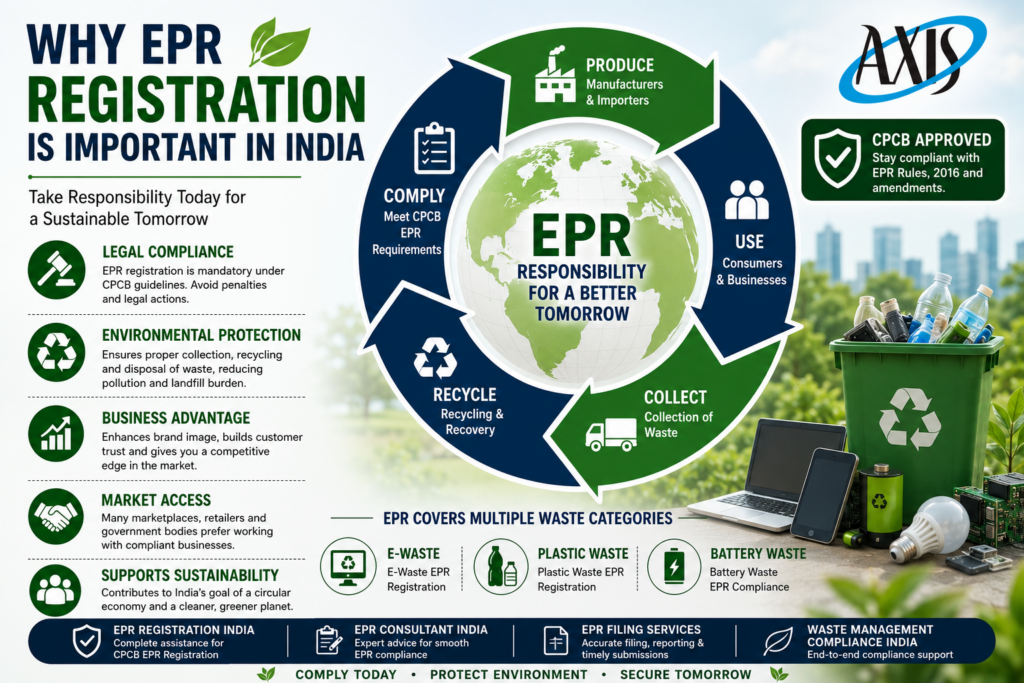
India is rapidly moving toward sustainable development and stricter environmental governance. As waste generation from plastics, electronics, and batteries continues to increase, businesses are expected to take responsibility for the end-of-life management of their products. This is where Why EPR Registration is Important in India becomes a critical consideration for manufacturers, importers, and brand owners.
Extended Producer Responsibility (EPR) is a regulatory framework that requires businesses to collect, recycle, and dispose of waste generated from their products. The objective is to reduce environmental pollution, encourage recycling, and create a circular economy. Understanding Why EPR Registration is Important in India helps organizations comply with government regulations while contributing to environmental protection.
Understanding EPR Registration
EPR Registration India is a mandatory approval issued under various waste management rules notified by the Government of India. The registration is primarily managed through the Central Pollution Control Board (CPCB).
Businesses that manufacture, import, or sell products covered under EPR regulations must obtain Extended Producer Responsibility Registration. This includes electronic equipment, plastic packaging materials, and batteries.
Whether a company requires E-Waste EPR Registration, Plastic Waste EPR Registration, or Battery Waste EPR Compliance, obtaining authorization is essential for legal operations.
Why EPR Registration is Important in India for Sustainable Growth
There are several reasons explaining Why EPR Registration is Important in India for modern businesses.
Regulatory Compliance
One of the primary reasons why EPR Registration is Important in India is that it is a legal obligation under environmental laws. Businesses that fail to comply may face regulatory action and penalties.
Environmental Protection
EPR promotes recycling and responsible disposal practices. Through effective waste collection systems, companies can reduce environmental damage and support sustainable resource utilization.
Improved Corporate Image
An organization with an EPR Certificate India demonstrates environmental responsibility. This helps build trust among customers, investors, and stakeholders.
Market Access and Expansion
Many distributors and institutional buyers prefer working with compliant organizations. Understanding Why EPR Registration is Important in India helps businesses secure partnerships and market opportunities.
Waste Reduction
Proper Waste Management Compliance India ensures that waste materials are diverted from landfills and processed through authorized recycling channels.
Businesses Required to Obtain EPR Registration
The following entities commonly require EPR Authorization India:
- Producers of electronic equipment
- Importers of regulated products
- Plastic packaging manufacturers
- Battery manufacturers and importers
- Brand owners selling covered products
Businesses seeking EPR Registration for Manufacturers, EPR Registration for Importers, or EPR Registration for Brand Owners must fulfill CPCB requirements.
Key Benefits of EPR Registration
Legal Security
EPR Compliance India protects businesses from regulatory issues and non-compliance penalties.
Enhanced Sustainability
Organizations contribute directly to environmental conservation through responsible waste collection and recycling.
Better Brand Recognition
One reason why EPR Registration is Important in India is that environmentally conscious consumers often prefer compliant brands.
Stronger Supply Chain Relationships
Compliance improves credibility among suppliers, distributors, and corporate clients.
Long-Term Business Stability
Maintaining Producer Responsibility Compliance ensures uninterrupted operations and reduces compliance risks.
Types of EPR Compliance in India
E-Waste EPR Registration
Electronic product manufacturers and importers must comply with e-waste management rules to ensure proper recycling and disposal.
Plastic Waste EPR Registration
Businesses dealing with plastic packaging must establish mechanisms for collection and recycling of post-consumer waste.
Battery Waste EPR Compliance
Battery producers and importers must manage battery waste through approved collection and recycling systems.
These frameworks highlight Why EPR Registration is Important in India for maintaining environmental accountability.
EPR Registration Process
The process generally involves:
- Creating an account through EPR Portal Registration
- Preparing required documentation
- Filing applications with CPCB
- Verification by authorities
- Grant of authorization
- Periodic reporting and compliance submissions
Professional EPR Filing Services can simplify the process and help avoid delays.
How Indiaxis Supports EPR Compliance
Indiaxis provides expert guidance for businesses seeking EPR Registration India. From documentation and application filing to compliance management and reporting, the company assists organizations throughout the registration process.
Expert in Environmental Compliance in India, Indiaxis enables manufacturers, importers, and brand owners to meet their regulatory needs smoothly. Their experts guide you through “Why EPR Registration is Important in India” in terms of getting your registrations timely and keeping your compliance up-to-date.
Future of EPR Compliance in India
India’s environmental regulations are evolving rapidly. Authorities are increasingly focusing on accountability, recycling targets, and digital compliance systems. Understanding Why EPR Registration is Important in India enables businesses to stay prepared for future regulatory changes and sustainability requirements.
Organizations that invest in EPR compliance today are more likely to achieve long-term operational success while contributing to national environmental goals.
Conclusion
The importance of Why EPR Registration is Important in India extends far beyond regulatory obligations. It helps businesses meet legal requirements, improve sustainability performance, strengthen brand credibility, and support responsible waste management practices.
From CPCB EPR Registration and Plastic Waste EPR Registration to Battery Waste EPR Compliance, depending on your industry needs, acquiring an authorization is another prerequisite to responsible functioning of your business. Why is EPR Registration necessary in India.
FAQs
1. What is EPR Registration?
EPR Registration (Extended Producer Responsibility) is a regulatory approval that obliges manufacturers to be responsible for the treatment and recycling of waste produced by their products.
2. Who needs EPR Registration in India?
Normally, producers, manufacturers, and brand owners that import or market controlled goods may be compelled to receive an EPR authorization.
3. What is the need for EPR Registration in India?
It helps businesses remain lawful, promote environmental safety, reduce waste, and operate responsibly.
4. What is the role of CPCB in EPR Registration?
CPCB oversees EPR regulations along with managing registration, control, and adherence activities.
5. Which areas need EPR compliance?
Electronics, plastic packaging, batteries, and many other such industries need to take EPR compliance actions.
6. What is EPR Portal Registration?
It is an online registration that allows the application of ERP approval and submission of required reports.
7. Can professional advisors assist with EPR Registration?
Yes, skilled professionals aid in documentation, submission of applications, completion of approval process, and consistent handling of obligations.