
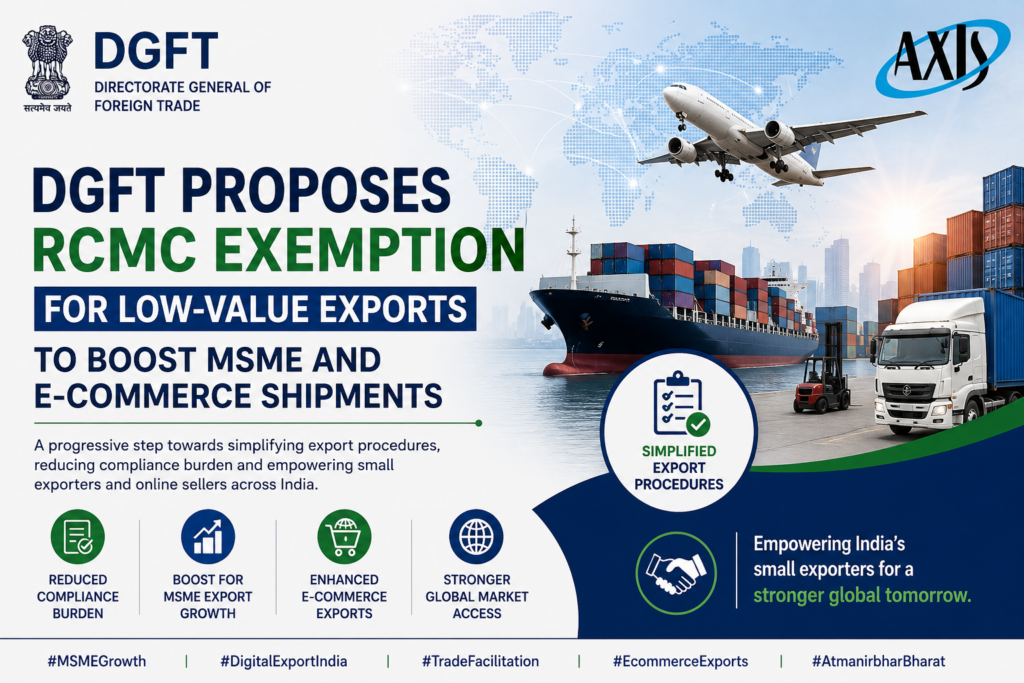
The Government of India continues to strengthen the country’s export ecosystem through policy reforms that support small businesses and digital trade. One of the most anticipated developments is that DGFT proposes RCMC exemption for low-value exports to boost MSME and E-Commerce Shipments. This proposal is expected to reduce compliance requirements for exporters handling small-value shipments and encourage broader participation in international trade.
India’s growing digital economy has created new opportunities for businesses to sell products globally through online platforms. However, compliance obligations such as obtaining a Registration-Cum-Membership Certificate (RCMC) can sometimes become an additional burden for small exporters. By introducing a DGFT RCMC Exemption, the government seeks to simplify export procedures and make international trade more accessible for emerging businesses.
What Does the Proposed Exemption Mean?
The proposal that DGFT proposes RCMC exemption for low-value exports to boost MSME and E-Commerce Shipments aims to remove the mandatory RCMC requirement for specific low-value export transactions. This reform is part of broader efforts to modernize India’s export framework and improve ease of doing business.
Currently, exporters often need RCMC registration from Export Promotion Councils to avail benefits under various export schemes. While these requirements serve important regulatory functions, they may create additional paperwork for businesses shipping products of relatively low value.
With DGFT proposes RCMC exemption for low-value exports to boost MSME and E-Commerce Shipments, exporters can expect a more streamlined compliance process and faster market access.
Benefits for MSMEs
India’s MSME sector contributes significantly to manufacturing output, employment generation, and exports. Despite their importance, many MSMEs face challenges when entering global markets.
The proposal that DGFT proposes RCMC exemption for low-value exports to boost MSME and E-Commerce Shipments can help address these concerns by simplifying compliance obligations and reducing operational costs.
Major MSME Export Benefits include:
- Reduced documentation requirements
- Faster onboarding into export markets
- Lower administrative expenses
- Enhanced access to international customers
- Increased participation in global trade
- Better utilization of Export Incentives for MSMEs
These advantages can accelerate MSME Export Growth and encourage more businesses to become exporters.
Strengthening India’s E-Commerce Export Sector
The rise of online marketplaces has transformed how businesses reach international customers. Today, even small enterprises can sell products globally through digital platforms.
As DGFT proposes RCMC exemption for low-value exports to boost MSME and E-Commerce Shipments, it creates a more supportive environment for Cross-Border E-Commerce Exports. Small online sellers can focus on expanding their business instead of navigating complex regulatory requirements.
The proposed exemption supports:
- Handicraft exporters
- Apparel manufacturers
- Home décor brands
- Beauty and wellness businesses
- Consumer goods exporters
- Startup-led export ventures
This aligns closely with India’s evolving E-Commerce Export Policy India and efforts to promote Digital Export India.
Simplified Export Procedures for Small Businesses
One of the key objectives behind the proposal is the implementation of Simplified Export Procedures. Small businesses often lack dedicated compliance teams and may find export regulations difficult to manage.
The initiative that DGFT proposes RCMC exemption for low-value exports to boost MSME and E-Commerce Shipments can help reduce procedural complexities while maintaining regulatory oversight.
Benefits of simplified procedures include:
- Faster export registration
- Reduced compliance burden
- Improved exporter confidence
- Greater participation in international trade
- Enhanced business scalability
These reforms also support Small Exporter Compliance India by making regulations more practical and accessible.
DGFT’s Role in Export Promotion
The Directorate General of Foreign Trade plays a central role in implementing India’s trade policies and facilitating exports. Through regular DGFT Export Notification updates and policy reforms, the organization works to create a competitive export environment.
The decision that DGFT proposes RCMC exemption for low-value exports to boost MSME and E-Commerce Shipments reflects a broader commitment to DGFT MSME Support and Export Promotion Policy India objectives.
This initiative contributes to:
- Export diversification
- Increased exporter participation
- Enhanced trade competitiveness
- Improved global market access
How Indiaxis Supports Exporters
Understanding changing export regulations is essential for businesses looking to expand internationally. Indiaxis assists exporters with regulatory guidance, trade compliance support, and export documentation services.
Whether businesses require assistance with Export Registration India, licensing requirements, or updates related to Indian Exporters Compliance, expert consultation can simplify the export journey and reduce compliance risks.
Future Impact on Indian Exports
Experts believe that if DGFT proposes RCMC exemption for low-value exports to boost MSME and E-Commerce Shipments is implemented effectively, it could significantly increase the number of active exporters in India.
The reform supports entrepreneurship, promotes digital trade, and aligns with the government’s vision of making India a global export hub. By reducing compliance hurdles, the proposal encourages businesses of all sizes to participate in international commerce and contribute to national economic growth.
Frequently Asked Questions (FAQs)
1. What is the DGFT RCMC Exemption proposal?
It is a proposal to exempt eligible low-value exporters from mandatory RCMC requirements.
2. How does the exemption help MSMEs?
It reduces compliance costs and simplifies export procedures.
3. What are low-value exports?
These are export shipments that fall below the value threshold specified by DGFT.
4. Will e-commerce exporters benefit from this proposal?
Yes, online sellers are among the primary beneficiaries of the proposed exemption.
5. Does the exemption remove all export compliance requirements?
No, exporters must still comply with applicable DGFT and customs regulations.
6. How does this support Cross-Border E-Commerce Exports?
It makes international shipping easier and more accessible for smaller businesses.
7. Can professional consultants help with export compliance?
Yes, export consultants can provide guidance on registrations, documentation, and policy updates.