
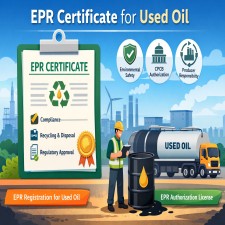
Environmental sustainability is no longer optional—it is a regulatory necessity. In India, the management of hazardous waste like used oil is governed under strict rules, making it mandatory for businesses to obtain an EPR Certificate for Used Oil.
Used oil contains contaminants that can harm ecosystems if improperly disposed of. To tackle this, the government introduced EPR for Used Oil, ensuring that producers and importers are responsible for waste collection and recycling.
This blog provides a complete breakdown of the EPR Certificate for Used Oil, including the registration process, compliance requirements, and how Indiaxis can assist businesses in achieving seamless certification.
Understanding EPR Used Oil Compliance
The term EPR Used Oil refers to the responsibility of producers to manage the lifecycle of oil products, including their post-consumer waste. Obtaining an EPR Certificate for Used Oil ensures that your business complies with the Central Pollution Control Board (CPCB) regulations and contributes to safe waste disposal practices.
The Used Oil EPR Certificate is mandatory for operating legally in industries involving lubricants, petroleum products, and oil-based machinery.
Who Should Apply for EPR Registration?
The requirement for EPR Registration for Used Oil applies to:
- Oil manufacturers
- Importers of lubricants and petroleum products
- Industrial users generating used oil
- Recyclers and re-refiners
These entities must obtain an EPR Registration Certificate to continue operations without legal issues.
Importance of EPR Certificate for Used Oil
The EPR Certificate for Used Oil offers multiple advantages beyond legal compliance:
- Promotes environmentally safe recycling
- Reduces pollution risks
- Enhances brand reputation
- Ensures smooth business operations
- Aligns with government sustainability goals
Adhering to EPR for Used Oil also helps companies build trust among stakeholders.
Detailed Process of EPR Registration for Used Oil
Getting an EPR Registration for Used Oil involves a structured procedure:
1. Registration on EPR Portal
Create an account on the official EPR portal to initiate the process.
2. Submission of Application
Fill out the application form for EPR Certification for Used Oil with accurate details.
3. Upload Required Documents
Attach all necessary documents, including company details and compliance certificates.
4. EPR Plan Submission
Provide a detailed plan outlining:
- Collection channels
- Recycling partners
- Disposal methods
5. Verification and Approval
The CPCB reviews the application and may request clarifications.
6. Issuance of EPR Authorization
Once approved, you receive the EPR Authorization license and EPR Certificate.
Documents Required for EPR Certification
To obtain the EPR Certificate for Used Oil, you need:
- Company PAN and GST certificate
- Import Export Code (if applicable)
- Pollution Control Board approvals
- Product details and specifications
- Agreements with recyclers
Proper documentation ensures faster approval of your EPR Registration Certificate.
How Indiaxis Helps in EPR Certification
Indiaxis is a trusted EPR Consultant in India offering comprehensive services for EPR Registration for Used Oil.
Their services include:
- End-to-end documentation support
- Filing applications on the EPR portal
- Coordination with CPCB authorities
- Ensuring compliance with guidelines
- Post-certification assistance
With Indiaxis, businesses can easily obtain their EPR Certificate for Used Oil without delays or errors.
Common Mistakes to Avoid
While applying for EPR Certification for Used Oil, businesses often make these mistakes:
- Incomplete documentation
- Incorrect data submission
- Lack of a proper EPR plan
- Failure to meet recycling targets
Avoiding these errors is crucial for successful EPR Authorization.
Regulatory Framework for Used Oil in India
The EPR for Used Oil falls under hazardous waste management regulations governed by CPCB. The government has introduced digital monitoring via the EPR portal to ensure transparency and accountability.
Businesses must regularly update their compliance status to maintain their EPR Registration Certificate.
Penalties for Non-Compliance
Failure to obtain an EPR Certificate for Used Oil can result in:
- Monetary penalties
- Suspension of operations
- Legal action by authorities
- Loss of business credibility
Therefore, timely EPR Registration is essential.
Conclusion
The EPR Certificate for Used Oil is a critical requirement for businesses dealing with oil products. It ensures proper waste management, legal compliance, and environmental protection.
By obtaining an EPR Registration Certificate and following EPR Authorization norms, companies can operate smoothly while contributing to sustainability goals.
Partnering with experts like Indiaxis simplifies the process and ensures hassle-free certification.
FAQs on EPR Certificate for Used Oil
1. What is EPR Used Oil?
It refers to the responsibility of producers to manage used oil waste through recycling and disposal.
2. Is EPR Certificate for Used Oil mandatory?
Yes, it is mandatory for manufacturers, importers, and recyclers.
3. How can I apply for EPR Registration for Used Oil?
You can apply through the CPCB EPR portal with required documents.
4. What is an EPR Authorization license?
It is official approval issued by CPCB after successful verification.
5. How long does EPR Certification take?
The timeline depends on documentation and approval processes.
6. Can Indiaxis help with EPR Registration?
Yes, Indiaxis provides complete assistance as an EPR Consultant in India.
7. What documents are required for EPR Certificate?
PAN, GST, IEC, pollution approvals, and recycling agreements are required.