
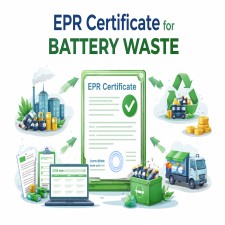
India is witnessing rapid growth in battery usage due to increasing demand for electric vehicles, consumer electronics, and renewable energy systems. However, this growth has also resulted in a rise in battery waste, which can harm the environment if not managed properly. To tackle this issue, the government has made it mandatory to obtain an EPR Certificate for Battery Waste.
Extended Producer Responsibility ensures that businesses are accountable for the safe disposal and recycling of batteries. This blog explains the complete process, benefits, and compliance requirements of the EPR Certificate for Battery Waste in India.
What is an EPR Certificate for Battery Waste?
An EPR Certificate for Battery Waste is an official approval issued by CPCB that allows businesses to legally manage battery waste. It ensures that producers fulfill their responsibility under EPR for Battery waste guidelines.
This certification is a crucial part of environmental management, ensuring sustainable disposal and recycling practices.
Importance of EPR for Battery Waste
Implementing EPR for Battery waste helps in:
- Reducing environmental hazards
- Promoting recycling of battery materials
- Ensuring safe waste disposal
- Supporting sustainable development
- Meeting legal requirements
Without a valid Battery Waste EPR Certificate, businesses cannot operate legally in this domain.
Who Needs EPR Registration for Battery Waste?
The following entities must apply for EPR Registration for Battery Waste:
- Manufacturers of batteries
- Importers of battery products
- Brand owners
- Dealers and refurbishers
These entities must obtain battery EPR registration through the CPCB EPR portal.
EPR Registration Process in India
The process for obtaining an EPR Registration Certificate includes:
1. Registration on EPR Portal
Businesses must register themselves on the CPCB EPR portal.
2. Submission of Application
Fill out the application form with accurate details related to products and operations.
3. EPR Plan Preparation
Submit a comprehensive plan for collection, recycling, and disposal under EPR for Battery waste.
4. CPCB Approval
After verification, CPCB issues the EPR Authorization license or EPR Certificate.
Role of Indiaxis in EPR Compliance
Companies like Indiaxis play a crucial role in helping businesses obtain an EPR Certificate for Battery Waste smoothly.
Their services include:
- End-to-end documentation support
- Filing applications on the EPR portal
- Preparing EPR compliance plans
- Coordinating with CPCB
With expert support from an EPR Consultant in India, businesses can avoid delays and ensure full compliance.
Key Documents Required
To apply for an EPR Certificate for Battery, you need:
- GST certificate
- Company incorporation documents
- PAN details
- Import/export license (if applicable)
- Product details
Accurate documentation is essential for successful EPR Registration.
Difference Between EPR Battery and E-Waste Registration
While both fall under environmental compliance, EPR Registration for Battery Waste and EPR Registration for E-Waste are different in terms of:
- Waste category
- Recycling process
- Compliance standards
Understanding this distinction helps in proper EPR battery compliance.
Compliance Requirements Under CPCB
To maintain your CPCB EPR battery compliance, businesses must:
- Meet annual recycling targets
- Maintain proper records
- File regular reports on the EPR portal
- Partner with authorized recyclers
Failure to comply may result in cancellation of the EPR Registration Certificate.
Benefits of EPR Certificate for Battery Waste
Obtaining an EPR Certificate for Battery Waste offers several advantages:
- Legal compliance
- Enhanced brand reputation
- Environmental sustainability
- Better waste management systems
- Competitive advantage
Common Challenges Faced by Businesses
Many businesses face issues like:
- Complex procedures
- Lack of awareness
- Difficulty in meeting recycling targets
- Documentation errors
Hiring an EPR Consultant in India simplifies the process significantly.
Future Scope of Battery EPR in India
With the rise in EV adoption and renewable energy, the importance of EPR battery compliance will grow further. Government regulations are becoming stricter, making battery EPR registration essential for all stakeholders.
Conclusion
The EPR Certificate for Battery Waste is a vital requirement for businesses dealing with batteries in India. It ensures responsible waste management, legal compliance, and environmental protection. With the right guidance from experts like Indiaxis, companies can easily obtain their EPR Certificate and stay compliant with CPCB regulations.
FAQs on EPR Certificate for Battery Waste
1. What is an EPR Certificate for Battery Waste?
It is a CPCB authorization for managing and recycling battery waste responsibly.
2. Who needs battery EPR registration?
Manufacturers, importers, and brand owners dealing with batteries.
3. How can I apply for EPR Registration?
You can apply through the CPCB EPR portal by submitting required documents.
4. What is an EPR Authorization license?
It is official approval granted by CPCB for EPR compliance.
5. Is EPR mandatory for battery businesses?
Yes, it is mandatory under Indian environmental regulations.
6. What is the role of an EPR Consultant in India?
They assist in documentation, application, and compliance.
7. What happens if I don’t comply with EPR rules?
You may face penalties, fines, or legal consequences.