
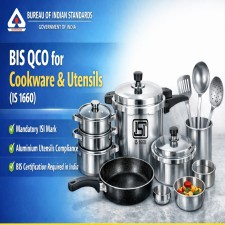
The Indian government has strengthened quality control measures across industries, and cookware is no exception. The BIS QCO for Cookware and Utensils IS 1660 plays a crucial role in ensuring safety, durability, and quality in kitchen products. With rising consumer awareness and safety concerns, compliance with the IS 1660 standard has become mandatory for manufacturers and importers.
As highlighted by industry platforms like Indiaxis, businesses dealing with aluminium cookware and utensils must understand the importance of BIS certification for cookware to remain compliant and competitive in the Indian market.
What is BIS QCO for Cookware and Utensils IS 1660?
The BIS QCO for Cookware and Utensils IS 1660 is a Quality Control Order issued by the Government of India. It mandates that specific cookware and utensils must comply with the IS 1660 standard and carry the ISI mark.
This order ensures that products meet defined safety and quality benchmarks before reaching consumers. It applies to both domestic manufacturers and foreign exporters supplying cookware in India.
Understanding IS 1660 Standard
The IS 1660 standard specifies the requirements for aluminium and aluminium alloy utensils. It includes:
- Material composition requirements
- Mechanical strength standards
- Finish and workmanship guidelines
- Safety parameters
Compliance with this standard ensures that cookware is safe for daily use and does not pose health risks.
Why BIS Certification for Cookware is Important
Obtaining BIS certification for cookware is not just a legal requirement but also a business advantage. Here’s why:
1. Consumer Safety
Ensures that utensils are free from harmful materials and safe for cooking.
2. Legal Compliance
Mandatory under the BIS QCO for Cookware and Utensils IS 1660.
3. Market Trust
Products with the ISI mark for utensils gain higher consumer trust.
4. Business Expansion
Required for selling cookware in India and for e-commerce platforms.
Scope of BIS ISI Certification for Utensils
The BIS ISI certification for utensils under IS 1660 primarily covers:
- Aluminium utensils
- Cooking pots and pans
- Pressure cookware components
- Kitchen utility items
Manufacturers must obtain a BIS license for cookware to use the ISI mark on their products.
Process of BIS Certification for Cookware
The process of obtaining cookware certification in India involves several steps:
1. Application Submission
Submit an application with product details and documentation.
2. Product Testing
Samples are tested in BIS-recognized laboratories.
3. Factory Inspection
BIS officials inspect manufacturing facilities.
4. Grant of License
Upon successful verification, a BIS license for cookware is issued.
Documents Required for BIS Approval
To obtain BIS approval for utensils in India, you need:
- Business registration certificate
- Manufacturing details
- Product specifications
- Test reports
- Quality control documents
Working with a BIS consultant for cookware can simplify the documentation process.
Aluminium Cookware BIS Certification
The aluminium cookware BIS certification is particularly important because aluminium is widely used in Indian kitchens. The certification ensures:
- No harmful chemical leaching
- Proper thickness and durability
- Resistance to corrosion
Manufacturers must strictly adhere to BIS compliance for cookware norms to avoid penalties.
ISI Mark for Utensils: A Symbol of Trust
The ISI mark for utensils signifies that the product complies with Indian standards. It is mandatory under the BIS QCO for Cookware and Utensils IS 1660.
Without this mark, manufacturers cannot legally sell cookware products in India.
Role of BIS Consultant for Cookware
A professional BIS consultant for cookware helps businesses:
- Understand regulatory requirements
- Prepare documentation
- Coordinate testing and inspection
- Ensure faster approval
As suggested by Indiaxis, hiring experts can significantly reduce delays and compliance risks.
Challenges in BIS Compliance for Cookware
Businesses often face challenges such as:
- Complex documentation
- Testing delays
- Factory compliance issues
- Frequent regulatory updates
However, proper planning and expert guidance can ensure smooth certification.
Conclusion
The BIS QCO for Cookware and Utensils IS 1660 is a vital regulation ensuring safety and quality in kitchen products. Compliance with the IS 1660 standard is mandatory for all manufacturers and importers dealing in aluminium cookware and utensils.
By obtaining BIS certification for cookware, businesses not only meet legal requirements but also build trust and expand their market reach. Partnering with a BIS consultant for cookware can streamline the process and ensure hassle-free certification.
FAQs (Frequently Asked Questions)
1. What is BIS QCO for Cookware and Utensils IS 1660?
It is a government regulation mandating ISI certification for aluminium cookware and utensils in India.
2. Is BIS certification mandatory for cookware?
Yes, under the BIS QCO for Cookware and Utensils IS 1660, certification is compulsory.
3. What is IS 1660 standard?
It defines safety and quality requirements for aluminium utensils.
4. How can I get BIS certification for cookware?
You need to apply, get product testing done, and pass factory inspection.
5. What is the ISI mark for utensils?
It is a certification mark indicating compliance with BIS standards.
6. Who needs BIS license for cookware?
Manufacturers and importers selling cookware in India.
7. Can I sell cookware without BIS certification?
No, selling without certification is illegal under the QCO.