
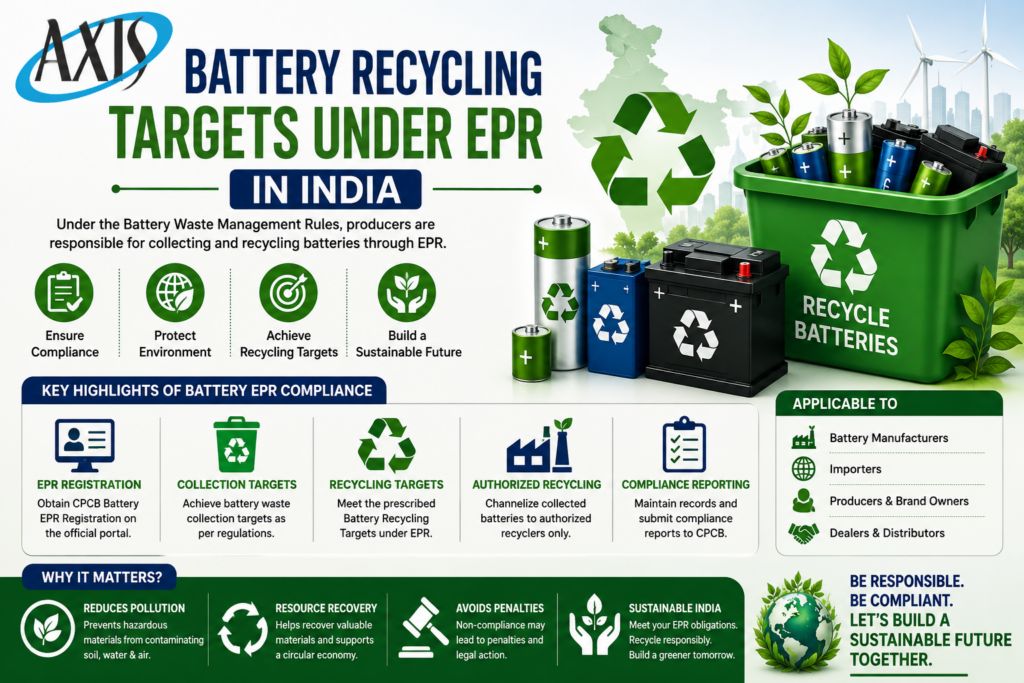
India is rapidly advancing toward a sustainable waste management ecosystem, and battery waste management has become a major regulatory focus. The introduction of Battery Recycling Targets Under EPR in India has created a structured framework for ensuring that battery producers take responsibility for the collection and recycling of batteries at the end of their life cycle.
The Battery Waste Management Rules India requires manufacturers, importers, and producers to comply with Extended Producer Responsibility (EPR) obligations. Understanding Battery Recycling Targets Under EPR in India is crucial for organizations seeking legal compliance, environmental sustainability, and long-term business growth.
Understanding Battery Recycling Targets Under EPR in India
The government has established Battery Recycling Targets Under EPR in India to ensure that used batteries are collected, processed, and recycled through authorized facilities. These targets apply to various battery categories, including portable batteries, automotive batteries, industrial batteries, and electric vehicle batteries.
Under the framework of Extended Producer Responsibility for Batteries, producers are responsible for achieving specified recycling percentages based on the quantity of batteries placed in the market. Compliance is monitored through the CPCB Battery EPR Portal and associated reporting mechanisms.
The primary goal of Battery Recycling Targets Under EPR in India is to reduce environmental damage while promoting resource recovery and circular economy practices.
Key Components of Battery EPR Compliance
Organizations must meet several requirements to fulfill Battery Recycling Targets Under EPR in India effectively.
Producer Registration
Every eligible producer must obtain CPCB Battery EPR Registration before introducing batteries into the Indian market.
Collection Mechanism
Businesses must establish systems for collecting used batteries from consumers, distributors, and collection centers.
Authorized Recycling
Collected batteries must be sent only to authorized recyclers recognized under applicable regulations.
Record Maintenance
Accurate documentation of battery sales, collection, recycling, and EPR certificates must be maintained.
Annual Reporting
Regular compliance reports must be submitted to demonstrate fulfillment of Battery Recycling Targets Under EPR in India.
Why Battery Recycling Compliance Matters
The increasing use of batteries in electronics, renewable energy systems, and electric vehicles has significantly increased battery waste generation. Without proper management, hazardous materials can contaminate soil and water resources.
Meeting Battery Recycling Targets Under EPR in India offers several benefits:
- Compliance with Battery Waste Management Compliance requirements
- Reduced environmental impact
- Better resource recovery from used batteries
- Enhanced corporate sustainability credentials
- Improved stakeholder confidence
Organizations that actively pursue Battery Recycling Compliance India contribute to national sustainability goals while reducing regulatory risks.
Battery Recycling Obligations India for Producers
The Battery Waste Management Rules India establish clear obligations for producers, including:
- Registration on the CPCB EPR Battery Portal
- Collection of end-of-life batteries
- Channelization to authorized recyclers
- Achievement of Battery Waste Collection Targets
- Procurement of recycling certificates
- Submission of compliance reports
These obligations ensure that Battery Recycling Targets Under EPR in India are achieved in a transparent and accountable manner.
Challenges in Achieving EPR Targets
Many organizations face difficulties while implementing EPR programs. Common challenges include:
Collection Network Development
Creating an efficient collection infrastructure across multiple regions can be complex.
Documentation Management
Maintaining accurate records for audits and inspections requires significant effort.
Regulatory Updates
Battery Recycling Regulations India continue to evolve, requiring businesses to stay informed.
Recycler Coordination
Producers must work with authorized recyclers to ensure compliance with recycling obligations.
Proper planning and professional guidance can help overcome these challenges effectively.
How Indiaxis Supports Battery EPR Compliance
Indiaxis provides comprehensive support for businesses seeking compliance with Battery Recycling Targets Under EPR in India. Their services include EPR registration, documentation preparation, compliance strategy development, reporting assistance, and regulatory advisory.
Our team specializes in EPR registration for battery manufacturers and Battery Waste Management Compliance, allowing us to assist organizations to simplify compliance, all while reducing their risks.
Future of Sustainable Battery Recycling India
As India expands electric mobility and renewable energy adoption, battery consumption will continue to rise. The success of Battery Recycling Targets Under EPR in India will play a vital role in reducing waste generation and maximizing material recovery.
Businesses that adopt proactive compliance strategies today will be better positioned to meet future regulatory requirements and sustainability expectations.
Conclusion
Compliance with Battery Recycling Targets Under EPR in India is no longer optional for battery producers and importers. It is a critical requirement under the Battery Waste Management Rules India and an important step toward environmental responsibility.
They can ensure fulfillment of EPR obligations and drive sustainable business by taking steps towards obtaining CPCB registration, adhering to collection duties, and collaborating with authorized recyclers.
Frequently Asked Questions (FAQs)
1. How are Battery Recycling Targets under EPR?
It’s legally required recycling levels that the Battery producers have to meet according to Battery Waste Management rules.
2. Who must register under Battery EPR regulation?
All the Battery Manufacturers, Importers, Producers and brand owners that introduce a battery in the Indian market must register themselves.
3. What is the role of Battery Producer responsibility?
It holds the battery producers to manage the battery waste responsibly, either through collection or recycling system.
4. How is the compliance tracked?
CPCB Battery EPR Portal, reports and Recycling certificate is used for tracking the compliance.
5. Does EPR cover EV’s battery waste?
Yes, EV batteries are being covered in the Battery Waste Management rule along with the EPR regulations.
6. How is Battery Waste Collection Target different?
These are Collection levels that the producers have to fulfill before sending it for any authorised recyclers.
7. How can Indiaxis help with compliance?
Indiaxis assists with registration, documentation, reporting, regulatory guidance, and EPR compliance management.