
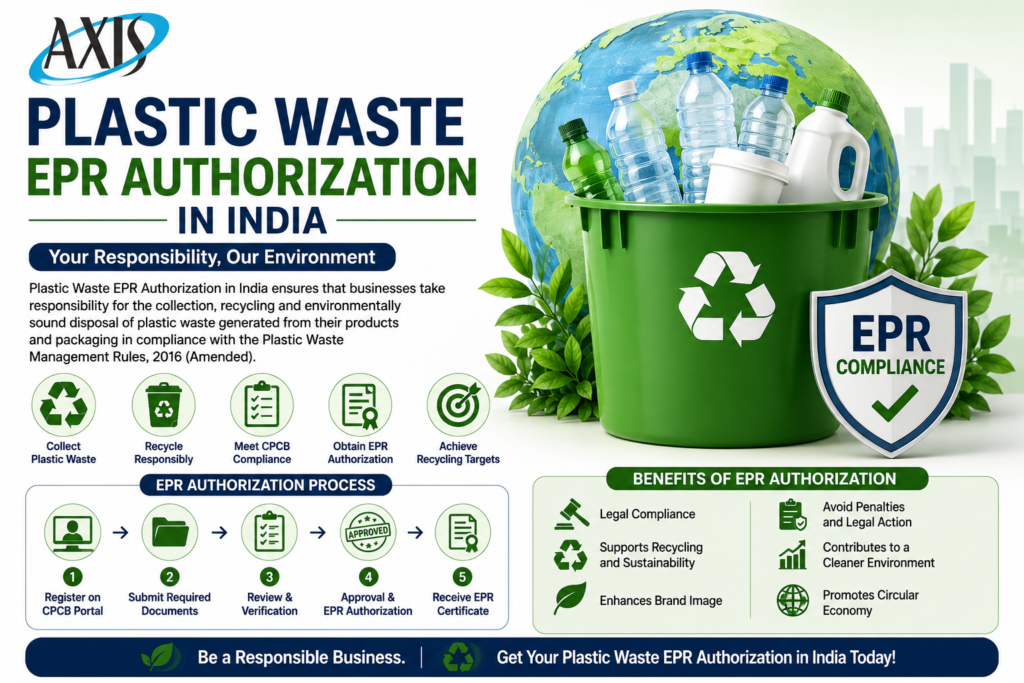
As India intensifies its efforts to combat plastic pollution, businesses dealing with plastic packaging must comply with environmental regulations through Plastic Waste EPR Authorization in India. Extended Producer Responsibility (EPR) has become a crucial compliance requirement for producers, importers, and brand owners (PIBOs) who introduce plastic packaging into the Indian market.
The framework ensures that businesses take responsibility for collecting, recycling, and managing the plastic waste generated from their products. Obtaining Plastic Waste EPR Authorization in India is essential for maintaining legal operations while contributing to environmental sustainability and circular economy objectives.
What is Plastic Waste EPR Authorization?
Plastic Waste EPR Authorization in India is a regulatory approval granted through the Central Pollution Control Board (CPCB) portal. It enables organizations to fulfill their obligations under the Plastic Waste Management Rules India.
Under this framework, businesses must ensure that a specific quantity of plastic waste is collected and recycled annually. The authorization confirms that the company has established mechanisms to achieve these recycling obligations and comply with national environmental standards.
Organizations covered under EPR include:
- Plastic packaging manufacturers
- Importers of packaged products
- Brand owners
- Online marketplaces
- Consumer goods companies
Without Plastic Waste EPR Authorization in India, eligible entities may face compliance issues, penalties, and operational restrictions.
Why Plastic Waste EPR Registration is Important
Environmental regulations have become stricter in recent years. Therefore, obtaining Plastic Waste EPR Registration is no longer optional for businesses covered under the regulations.
Key reasons for compliance include:
Legal Compliance
Businesses must comply with the Plastic Waste Management Rules India and CPCB guidelines.
Environmental Responsibility
EPR encourages sustainable waste management and supports national recycling initiatives.
Brand Reputation
Consumers increasingly prefer environmentally responsible brands.
Business Continuity
Valid EPR Authorization for Plastic Waste helps companies avoid legal disruptions and penalties.
The importance of Plastic Waste EPR Authorization in India continues to grow as authorities strengthen enforcement mechanisms across industries.
CPCB EPR Registration Process
The process for securing Plastic Waste EPR Authorization in India involves several stages.
Business Categorization
The first step is determining whether the applicant qualifies as a producer, importer, or brand owner.
Collection of Documents
Required documents typically include:
- GST Registration
- PAN Card
- Business Incorporation Certificate
- Import Export Code (if applicable)
- Plastic packaging details
Online Registration
Applicants must create an account and submit information through the CPCB EPR Registration portal.
EPR Action Plan
Businesses must present a strategy for collecting and recycling plastic waste generated through their products.
Verification and Approval
Authorities evaluate the submitted details and issue authorization upon successful verification.
After approval, companies receive Plastic Waste EPR Authorization in India and become eligible to conduct business in compliance with applicable regulations.
Plastic Waste Recycling Compliance Requirements
Compliance does not end with registration. Businesses must continuously meet their obligations under EPR regulations.
Key compliance requirements include:
- Achieving annual recycling targets
- Working with authorized recyclers
- Maintaining transaction records
- Filing compliance reports
- Monitoring waste management activities
Proper Plastic Recycling Compliance helps organizations demonstrate their commitment to sustainability and regulatory adherence.
Plastic Waste Producer Responsibility Framework
The concept of Plastic Waste Producer Responsibility ensures that waste management costs and obligations are shared by businesses that introduce plastic packaging into the market.
Responsibilities include:
- Collection of plastic waste
- Recycling and recovery activities
- Fulfillment of recycling obligations
- Environmental reporting
By obtaining Plastic Waste EPR Authorization in India, businesses actively participate in reducing plastic pollution and promoting responsible waste management.
EPR Registration for Importers and Brand Owners
Importers and brand owners are among the primary stakeholders covered under EPR regulations.
EPR Registration for Importers and Brand Owners requires businesses to declare the quantity of plastic packaging introduced into the market and ensure corresponding waste management activities.
Compliance obligations include:
- Registration with CPCB
- Annual reporting
- Waste collection planning
- Meeting recycling targets
- Record maintenance
Failure to comply may lead to penalties and restrictions on business activities.
How Indiaxis Supports EPR Compliance
Navigating environmental regulations can be challenging without expert guidance. Indiaxis provides professional assistance for Plastic Waste EPR Authorization in India, helping organizations meet all compliance requirements efficiently.
Services offered include:
- CPCB portal registration
- Documentation preparation
- Compliance planning
- Recycling target management
- Reporting support
- Ongoing advisory services
With professional support, businesses can secure Plastic Waste EPR Authorization in India while minimizing compliance risks and administrative burdens.
Benefits of Professional Plastic Waste Compliance Services
Engaging experienced consultants offers several advantages:
- Faster approval process
- Accurate documentation
- Reduced compliance errors
- Expert regulatory guidance
- Long-term compliance management
Whether a business requires Plastic Packaging EPR Registration, Plastic Waste Management Authorization, or an EPR Certificate for Plastic Waste, professional consultants simplify the entire process.
Conclusion
The growing focus on environmental protection has made Plastic Waste EPR Authorization in India a critical requirement for producers, importers, and brand owners. Through effective compliance strategies, businesses can meet recycling obligations, contribute to sustainability goals, and maintain uninterrupted operations.
Obtaining Plastic Waste EPR Authorization in India not only ensures regulatory compliance but also strengthens a company’s commitment to environmental responsibility and sustainable growth.
Frequently Asked Questions (FAQs)
1. What is Plastic Waste EPR Authorization in India?
Establishment is required to be authorized, for required compliance with the rules of management of plastic waste and the responsibility of recycling.
2. Who needs plastic waste EPR registration?
Plastic waste is registered by manufacturers, importers, brand owners, and companies that sell plastic packaging to the market.
3. What does CPCB do as part of EPR registration?
It introduces the participating organization-the Central Pollution Control Board, which is in charge of registration, approvals, supervision, and guarantee of execution.
4. What tasks are included in plastic waste producer responsibility?
It includes the collection of waste, recycling of waste, compilation of waste reporting forms, and realization of waste recovery targets established.
5. Can importers apply for EPR Authorization?
Yes. Importers using plastic packaging for products to be imported into India need EPR registration.
6. What are Plastic Waste Recycling Targets?
These are yearly recycling obligations if laid down by regulators that help us take care of the waste.
7. Why hire an EPR Consultant India?
An EPR consultant assists the business in registration, compilation of documentation and compliance reporting on the part of the business to the relevant authorities to meet regulatory obligations.