
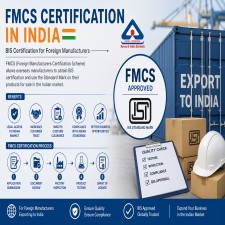
India is one of the fastest-growing consumer markets in the world, attracting manufacturers from across the globe. However, foreign companies planning to export products to India must comply with Indian quality and safety regulations. One of the most important regulatory approvals required is FMCS Certification in India.
The certification is governed by the Bureau of Indian Standards under the Foreign Manufacturers Certification Scheme. This scheme ensures imported products meet Indian quality benchmarks before entering the market.
This detailed guide by Indiaxis explains the FMCS registration process, required documentation, approval stages, benefits, and compliance obligations for foreign manufacturers.
What is FMCS Certification in India?
FMCS Certification in India is a certification system that allows foreign manufacturers to obtain BIS approval for products exported to India. Through this certification, overseas companies receive permission to use the BIS Standard Mark India on approved products.
The certification ensures that imported goods comply with Indian Standards and safety requirements. It also helps maintain product quality consistency across domestic and imported products.
Manufacturers operating outside India must obtain this approval if their products fall under mandatory BIS certification categories.
Overview of the Foreign Manufacturers Certification Scheme
The Foreign Manufacturers Certification Scheme was introduced by BIS to regulate imported products and protect Indian consumers from substandard goods.
Under the scheme, foreign manufacturers undergo:
- Product testing
- Factory inspection
- Quality assessment
- Compliance verification
After successful evaluation, the company receives a Foreign Manufacturer BIS License, enabling lawful sale and distribution in India.
Why FMCS Certification is Important for Foreign Companies
Obtaining FMCS Certification in India offers several advantages for international businesses.
Legal Compliance
Certain products cannot be imported into India without BIS approval. Certification ensures regulatory compliance and avoids customs-related issues.
Better Market Acceptance
Indian consumers and distributors prefer products carrying the BIS Standard Mark India because it reflects safety and quality assurance.
Increased Business Opportunities
Manufacturers with valid BIS Certification India approvals gain easier access to Indian distributors, retailers, and government procurement projects.
Reduced Compliance Risks
The certification minimizes the possibility of product recalls, import restrictions, or legal penalties.
Products Covered Under BIS FMCS Certification
The BIS FMCS Certification scheme covers various industrial and consumer product categories, including:
- Electrical appliances
- Steel products
- Automotive components
- Cement products
- Chemicals
- Switches and control devices
- Pressure cookers
- Industrial equipment
Foreign manufacturers should verify applicable Indian Standards before initiating exports.
FMCS Approval Process Explained
The FMCS Approval Process includes several important stages designed to verify product quality and manufacturing practices.
1. Application Filing
The manufacturer submits an application with product details, factory information, and supporting documents.
2. Product Testing
Samples are tested in BIS-approved laboratories according to applicable Indian Standards.
3. Factory Inspection
BIS officers visit the overseas manufacturing facility to inspect production systems and quality control measures.
4. Technical Review
BIS evaluates inspection findings, laboratory reports, and compliance documents.
5. Grant of License
After successful verification, BIS issues the BIS License for Foreign Manufacturers.
The approved manufacturer can then use the BIS Standard Mark India on certified products.
Documents Required for FMCS Registration India
Manufacturers applying for FMCS Registration India generally need the following documents:
- Factory registration certificate
- Product technical specifications
- Manufacturing flowchart
- Quality control documents
- Laboratory test reports
- Trademark documents
- Details of Authorized Indian Representative
Incomplete documentation can significantly delay approval timelines.
Importance of Authorized Indian Representative
Foreign manufacturers must appoint an Authorized Indian Representative (AIR) while applying for certification.
The AIR acts as the local contact point between BIS and the foreign manufacturer and assists with:
- Regulatory communication
- Documentation handling
- Compliance coordination
- Inspection support
This requirement is mandatory under the FMCS scheme.
Role of BIS FMCS Consultant
Hiring an experienced BIS FMCS Consultant helps manufacturers simplify the certification process and avoid unnecessary delays.
Consultants assist with:
- Application preparation
- Product standard identification
- Documentation management
- Inspection coordination
- Technical compliance
- Renewal procedures
Professional guidance improves approval efficiency and reduces compliance errors.
Challenges Faced During FMCS Certification
Foreign companies often encounter several challenges while applying for FMCS Certification in India, such as:
- Understanding Indian regulatory requirements
- Managing technical documentation
- Coordinating overseas factory inspections
- Meeting Indian testing standards
- Handling communication with BIS authorities
Proper planning and expert consultation can help overcome these challenges effectively.
Validity and Renewal of BIS FMCS Certification
The validity of the BIS FMCS Certification license depends on the product category and BIS regulations. Manufacturers must ensure timely renewal to maintain uninterrupted market access.
Renewal generally requires:
- Updated compliance records
- Production details
- Surveillance audits
- Quality maintenance verification
Failure to renew may lead to license suspension or cancellation.
How FMCS Certification Supports Business Growth
Having FMCS Certification in India strengthens a company’s market position by enhancing credibility and customer confidence.
Benefits include:
- Faster importer acceptance
- Easier customs clearance
- Improved distributor trust
- Better brand reputation
- Access to regulated sectors
For global manufacturers, certification is an important investment for long-term business growth in India.
Conclusion
India’s regulatory environment requires imported products to comply with strict quality and safety standards. Obtaining FMCS Certification in India through the Foreign Manufacturers Certification Scheme is essential for foreign manufacturers planning to expand into the Indian market.
The certification process includes testing, inspection, and compliance verification, ensuring products meet Indian Standards before sale. Companies seeking smooth approvals often rely on experienced compliance partners like Indiaxis for expert guidance.
By obtaining BIS FMCS Certification, foreign manufacturers can strengthen brand trust, improve regulatory compliance, and achieve sustainable market success in India.
FAQs on FMCS Certification in India
1. What is FMCS Certification in India?
It is a BIS certification scheme for foreign manufacturers exporting products to India.
2. Is BIS FMCS Certification mandatory?
Yes, it is mandatory for products covered under compulsory BIS standards.
3. What is the purpose of the Foreign Manufacturers Certification Scheme?
The scheme ensures imported products comply with Indian quality and safety standards.
4. Can foreign companies directly apply for BIS certification?
Yes, but they must appoint an Authorized Indian Representative.
5. What is the role of a BIS FMCS Consultant?
Consultants help manage documentation, testing, inspections, and compliance procedures.
6. How long does the FMCS approval process take?
The process usually takes several months depending on testing and inspection schedules.
7. What happens after receiving the BIS license?
Manufacturers can use the BIS Standard Mark India on approved products for sale in India.