
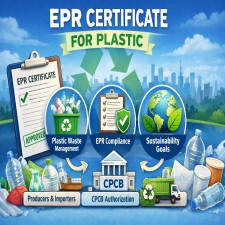
In today’s environmentally conscious world, businesses dealing with plastic must comply with strict waste management rules. One of the most important requirements is obtaining an EPR Certificate for Plastic, which ensures the responsible handling of plastic waste.
The Government of India has made EPR Registration for Plastic Waste mandatory under the Plastic Waste Management Rules. Whether you are a manufacturer, importer, or brand owner, compliance with the Extended Producers Responsibility for plastic packaging is essential.
This blog provides a detailed step-by-step guide to obtaining an EPR Certificate for Plastic, along with insights into compliance, documentation, and how Indiaxis can support your business.
Understanding the EPR Certificate for Plastic
The EPR Certificate for Plastic is an authorization granted by the Central Pollution Control Board (CPCB). It ensures that companies take responsibility for collecting, recycling, and disposing of plastic waste generated from their products.
This system of Extended Producer Responsibility for plastic packaging promotes sustainability and reduces environmental pollution. Businesses must obtain a Plastic Waste EPR Certificate before selling or distributing plastic-packaged products in India.
Who Requires EPR Registration for Plastic Waste?
The following entities must apply for EPR Registration for Plastic Waste:
- Producers of plastic packaging materials
- Importers of plastic goods or packaging
- Brand owners selling packaged products
- Online marketplaces using plastic packaging
Without Plastic Packaging EPR Registration, companies cannot legally operate in India.
Detailed Process for EPR Certificate for Plastic
Obtaining an EPR Certificate for Plastic involves a structured process:
1. Online Application Submission
Register on the CPCB portal for Plastic EPR Registration and fill out the application form.
2. Upload Required Documents
Documents required include:
- PAN and GST details
- Company incorporation certificate
- Import-export code (if applicable)
- Product and packaging details
3. Preparation of EPR Action Plan
A proper action plan is essential for EPR Compliance for Plastic, including:
- Waste collection mechanism
- Recycling targets
- Agreements with authorized recyclers
4. CPCB Evaluation
The CPCB reviews the application and verifies compliance with EPR Authorization India norms.
5. Grant of EPR Authorization
Once approved, the company receives EPR Authorization for Plastic.
6. Post-Approval Compliance
After receiving the Plastic Waste EPR Certificate, companies must:
- File annual returns
- Maintain records of waste management
- Meet recycling targets
Indiaxis provides expert support for smooth EPR Authorization Services and compliance.
Key Benefits of EPR Certificate for Plastic
Obtaining an EPR Certificate for Plastic offers several advantages:
- Legal compliance with government regulations
- Improved corporate social responsibility
- Enhanced brand credibility
- Contribution to environmental sustainability
Businesses with proper Plastic EPR Registration gain trust from customers and regulatory authorities.
Importance of EPR Compliance for Plastic Packaging
Strict EPR Compliance for Plastic ensures that companies:
- Reduce plastic pollution
- Promote recycling practices
- Minimize environmental impact
The Plastic Packaging EPR Registration system ensures accountability across the supply chain.
Why Choose Indiaxis for EPR Registration?
Indiaxis is a leading consultancy offering:
- Complete EPR Registration for Plastic Waste
- Expert assistance in documentation
- Fast-track approvals
- End-to-end compliance management
Their expertise in EPR Authorization India helps businesses avoid delays and penalties.
Challenges in EPR Registration
Companies often face difficulties such as:
- Complex compliance procedures
- Lack of clarity on regulations
- Difficulty in meeting recycling targets
- Frequent updates in government policies
With Indiaxis, businesses can easily obtain their EPR Certificate for Plastic without hassle.
Conclusion
The EPR Certificate for Plastic is a crucial requirement for businesses dealing with plastic packaging in India. It not only ensures legal compliance but also promotes sustainable business practices.
By obtaining EPR Registration for Plastic Waste, companies can contribute to environmental protection while enhancing their brand image. Partnering with experts like Indiaxis ensures a smooth and efficient registration process.
FAQs on EPR Certificate for Plastic
1. What is the purpose of EPR Certificate for Plastic?
It ensures that businesses take responsibility for plastic waste management.
2. Is EPR mandatory for plastic packaging?
Yes, it is mandatory under Indian environmental laws.
3. How can I apply for EPR Registration?
You can apply through the CPCB online portal.
4. What documents are required?
PAN, GST, company details, and product information are required.
5. How long is the EPR Certificate valid?
Validity depends on compliance with CPCB guidelines.
6. What is EPR Authorization India?
It is the official approval from the CPCB for compliance with plastic waste management.
7. Can consultants help with EPR Registration?
Yes, firms like Indiaxis provide complete EPR Authorization Services.