
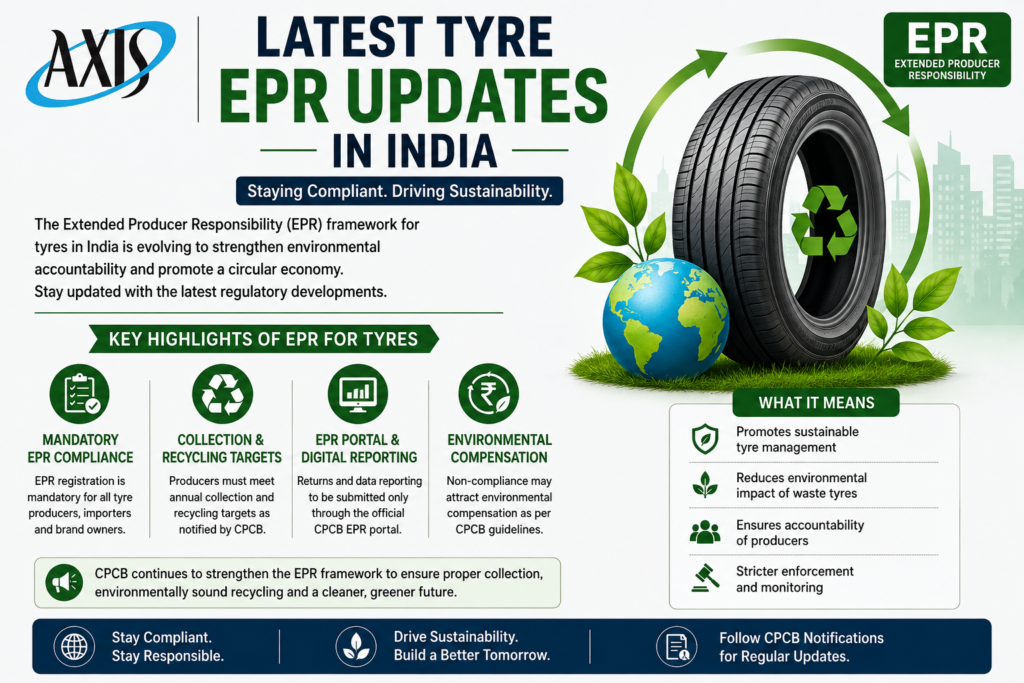
The Latest Tyre EPR Updates in India have become a major focus for tyre manufacturers, importers, recyclers, and brand owners. The Government of India continues to strengthen environmental regulations to improve waste tyre collection, recycling, and sustainable resource utilization. Businesses operating in the tyre industry must understand these changes to remain compliant and avoid regulatory challenges.
With increasing environmental concerns and stricter enforcement by the Central Pollution Control Board (CPCB), the Latest Tyre EPR Updates in India require organizations to take responsibility for the end-of-life management of tyres introduced into the market. The updated framework encourages recycling, resource recovery, and proper disposal practices.
What is Extended Producer Responsibility for Tyres?
Extended Producer Responsibility for Tyres is a policy approach that places responsibility on producers for managing tyre waste generated from their products. Under this system, manufacturers and importers must ensure that a specified quantity of waste tyres is collected and recycled through authorized channels.
The Latest Tyre EPR Updates in India aim to create a transparent ecosystem where producers, recyclers, and regulators work together to improve tyre waste management across the country.
Major Changes Under Tyre EPR Updates India
Recent amendments have introduced several important compliance measures:
- Mandatory registration on the CPCB online portal.
- Improved digital tracking of tyre waste movement.
- Stronger verification of recycling activities.
- Increased accountability for producers and importers.
- Enhanced reporting obligations.
- Recognition of authorized recyclers and processors.
- Electronic generation of EPR credits and certificates.
These Tyre EPR Updates India are intended to improve traceability and reduce illegal disposal of waste tyres.
CPCB Tyre EPR Registration Process
Obtaining CPCB Tyre EPR Registration is the first step toward regulatory compliance. Businesses involved in manufacturing or importing tyres must complete registration before conducting regulated operations.
The registration process generally includes:
- Company registration documents
- GST certificate
- PAN details
- Product information
- Sales and import data
- Authorized representative details
- Business address proof
The Latest Tyre EPR Updates in India have made registration a critical requirement for maintaining lawful operations in the tyre sector.
Understanding Tyre Recycling Obligations India
Under the updated framework, organizations must fulfill prescribed Tyre Recycling Obligations India based on the quantity of tyres introduced into the market. Producers are required to purchase EPR certificates from authorized recyclers who process waste tyres according to approved standards.
The Latest Tyre EPR Updates in India emphasize accurate record keeping and periodic reporting to demonstrate compliance with recycling targets.
Waste Tyre Recycling Authorization and Certificates
Authorized recyclers play a vital role in the compliance ecosystem. They obtain Waste Tyre Recycling Authorization and generate EPR certificates after successfully processing waste tyres.
These certificates serve as proof that recycling obligations have been met. Businesses must ensure they obtain certificates only from approved recycling facilities to comply with Tyre Waste Recycling Rules.
Importance of Tyre EPR Guidelines 2026
The evolving Tyre EPR Guidelines 2026 focus on sustainability, resource recovery, and environmental protection. The guidelines encourage industries to adopt responsible waste management practices while supporting India’s circular economy goals.
The Latest Tyre EPR Updates in India also encourage businesses to strengthen internal compliance systems, maintain proper documentation, and monitor recycling targets regularly.
Challenges Faced by Businesses
Many companies struggle with:
- Understanding regulatory requirements.
- Managing EPR targets.
- Maintaining compliance records.
- Coordinating with authorized recyclers.
- Monitoring certificate transactions.
- Preparing reports for regulatory authorities.
Professional guidance can simplify these processes and reduce compliance risks.
How Indiaxis Supports Tyre EPR Compliance
Indiaxis helps businesses navigate the Latest Tyre EPR Updates in India through end-to-end compliance support. From registration and documentation to EPR target management and certificate procurement, expert assistance enables organizations to meet regulatory obligations efficiently.
Working with a reliable Tyre EPR Compliance Consultant can save time, reduce errors, and improve overall compliance performance.
Benefits of Following Latest Tyre EPR Regulations
Organizations that comply with the Latest Tyre EPR Regulations gain several advantages:
- Improved environmental credibility.
- Reduced risk of penalties.
- Better regulatory relationships.
- Stronger sustainability performance.
- Enhanced corporate reputation.
- Contribution to responsible waste management.
- Long-term business continuity.
The Latest Tyre EPR Updates in India provide a clear roadmap for sustainable tyre waste management while ensuring accountability throughout the supply chain.
Conclusion
The Latest Tyre EPR Updates in India have significantly strengthened the regulatory framework governing tyre waste management. Businesses must prioritize registration, target fulfillment, certificate management, and regulatory reporting to remain compliant. By understanding EPR Registration for Tyre Manufacturers India and partnering with authorized recyclers, organizations can meet legal obligations while supporting environmental sustainability.
FAQs
1. Latest Tyre EPR Update in India:
Stricter CPCB compliance, digital certificates for tyre EPR, advanced recycling duties, etc.
2. Required to get CPCB Tyre EPR Registration:
Tyre manufacturers, importers, or producers that bring any tyre into India.
3. What is Waste Tyre Recycling Authorization?
It is permission given to recyclers to treat or dispose of waste tyres according to the related rules and acts.
4. How is Tyre EPR Targets India Calculated?
Tyre EPR targets are usually calculated on the amount of tyres that the producers are introducing to the Indian market.
5. Importance of Tyre EPR Certificate:
It shows proof that they are aware of or have satisfied their obligation towards the recycling of tyres.
6. Advantages of Complying with Tyre EPR Guidelines 2026:
Compliance to regulations enhances environmental protection and reduces legal exposure.
7. Can a consultant help with tyre EPR?
A professional consultant can facilitate the registration and reporting of your tyre EPR compliance requirements.