
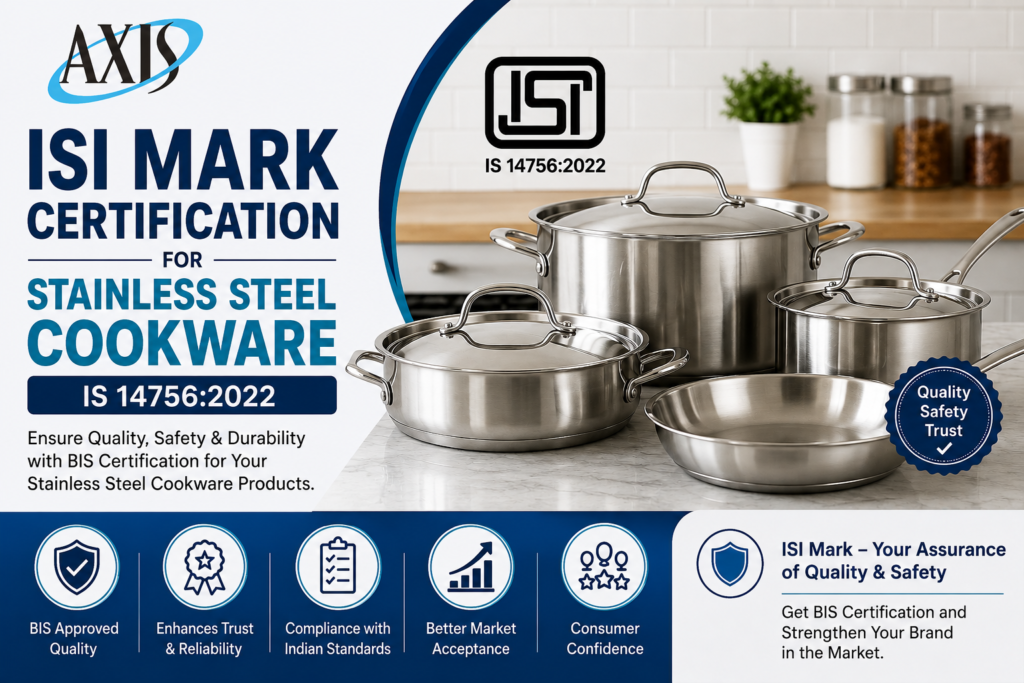
Stainless steel cookware is one of the most widely used kitchen products in homes, restaurants, hotels, and commercial food establishments across India. Consumers prefer stainless steel cookware because of its durability, corrosion resistance, hygienic properties, and long service life. To ensure that cookware products meet quality and safety requirements, manufacturers are required to comply with the relevant Indian Standards and obtain ISI Mark Certification for Stainless Steel Cookware from the Bureau of Indian Standards (BIS).
The ISI Mark Certification for Stainless Steel Cookware serves as a symbol of quality, reliability, and compliance with Indian regulations. Products carrying the ISI mark demonstrate that they have been tested and manufactured according to the prescribed standards, ensuring safety for consumers and consistency in performance.
Importance of ISI Mark Certification for Stainless Steel Cookware
The kitchenware market in India has witnessed significant growth due to increasing consumer awareness regarding food safety and product quality. With numerous manufacturers and imported products available in the market, quality certification becomes essential.
Some key benefits of obtaining ISI Mark Certification for Stainless Steel Cookware include:
- Ensures compliance with BIS quality standards.
- Enhances consumer confidence and trust.
- Improves product credibility in domestic and international markets.
- Reduces the risk of product rejection and complaints.
- Demonstrates commitment to quality manufacturing practices.
- Helps manufacturers meet regulatory requirements.
- Provides a competitive advantage in the cookware industry.
What is the ISI Mark?
The ISI Mark is a certification mark issued by the Bureau of Indian Standards (BIS), the national standards body of India. The mark indicates that a product conforms to the relevant Indian Standard and has undergone quality testing and inspection.
For cookware manufacturers, obtaining ISI Mark Certification for Stainless Steel Cookware signifies that their products satisfy specified requirements related to material composition, design, performance, and safety.
Products Covered Under Stainless Steel Cookware Certification
Various stainless steel cookware products may require compliance with applicable BIS standards, including:
- Stainless steel cooking pots
- Stainless steel pans
- Pressure cookware components
- Stainless steel casseroles
- Stock pots
- Frying pans
- Saucepans
- Steamers
- Commercial cooking utensils
- Multi-purpose cooking vessels
The exact standard and certification requirements depend on the product category and intended use.
Eligibility for ISI Mark Certification for Stainless Steel Cookware
Manufacturers producing stainless steel cookware in India can apply for BIS certification. The applicant must possess:
- A registered manufacturing unit.
- Quality control facilities.
- Product testing arrangements.
- Qualified technical personnel.
- Production processes complying with BIS requirements.
The certification is generally granted to the manufacturing unit and not to traders or distributors.
Documents Required
To obtain ISI Mark Certification for Stainless Steel Cookware, manufacturers typically need to submit the following documents:
- Factory registration certificate.
- Business license and GST registration.
- Manufacturing process details.
- List of machinery and equipment.
- Quality control procedures.
- Test reports from recognized laboratories.
- Factory layout plan.
- Details of raw materials used.
- Authorized signatory documents.
- Product specifications and technical details.
Additional documents may be requested by BIS depending on the product category.
Certification Process
The process for obtaining ISI Mark Certification for Stainless Steel Cookware generally involves the following steps:
1. Application Submission
The manufacturer submits an online application to BIS along with the required documents and applicable fees.
2. Document Verification
BIS officials examine the submitted documents to verify compliance with the relevant standards and certification requirements.
3. Factory Inspection
A BIS inspection team visits the manufacturing facility to assess production capabilities, quality control systems, testing facilities, and manufacturing practices.
4. Product Testing
Samples of stainless steel cookware are collected and tested in approved laboratories to ensure conformity with applicable Indian Standards.
5. Evaluation and Approval
Based on inspection findings and laboratory test results, BIS evaluates the application for certification approval.
6. Grant of License
Upon successful compliance, BIS grants the license to use the ISI mark on certified stainless steel cookware products.
Benefits for Manufacturers
Obtaining ISI Mark Certification for Stainless Steel Cookware offers several business advantages:
Increased Market Acceptance
Retailers, distributors, and institutional buyers often prefer certified products because they assure quality and compliance.
Consumer Confidence
Customers are more likely to purchase cookware carrying the ISI mark as it signifies safety and reliability.
Regulatory Compliance
Certification helps manufacturers comply with Indian quality regulations and avoid legal complications.
Brand Enhancement
An ISI-certified product reflects a company’s commitment to quality, strengthening brand reputation and customer loyalty.
Better Business Opportunities
Certified products often gain easier access to government tenders, institutional purchases, and organized retail markets.
Validity and Renewal
The ISI certification license remains valid for a specified period, subject to BIS regulations and continued compliance. Manufacturers must maintain quality standards and renew the license as required. Periodic surveillance inspections may also be conducted by BIS to ensure ongoing conformity.
Conclusion
The ISI Mark Certification for Stainless Steel Cookware is an essential quality assurance mechanism that helps manufacturers demonstrate compliance with Indian standards while ensuring consumer safety. By obtaining certification, manufacturers can strengthen market credibility, enhance brand value, and gain a competitive advantage in the growing cookware industry. As consumer demand for safe and durable kitchen products continues to rise, ISI certification remains a valuable tool for building trust and ensuring consistent product quality across the market.