
India’s growing dependence on batteries for consumer electronics, renewable energy storage systems, and electric vehicles has increased the importance of responsible battery disposal. Battery EPR Registration in India 2026: Cost, Documents, and Process is now a critical compliance requirement for businesses covered under the Battery Waste Management Rules 2022.
The Government of India has introduced Extended Producer Responsibility for Batteries to ensure that manufacturers, importers, and brand owners remain accountable for the collection, recycling, and environmentally sound disposal of battery waste. Through the CPCB EPR Portal Registration system, regulated entities can obtain authorization and fulfill their recycling obligations.
Indiaxis assists businesses in navigating the entire registration process while ensuring compliance with CPCB regulations and sustainability goals.
Understanding Battery EPR Compliance
Battery EPR Compliance India is a regulatory framework that assigns responsibility to producers for managing batteries after they become waste. The objective is to promote proper recycling, reduce environmental pollution, and recover valuable materials from used batteries.
The regulations apply to various battery categories, including:
- Portable Batteries
- Automotive Batteries
- Industrial Batteries
- Electric Vehicle Batteries
- Lithium-Ion Batteries
- Lead Acid Batteries
Organizations dealing with these products must secure CPCB Battery Registration before conducting business activities involving batteries in India.
Importance of Battery Waste Management Rules 2022
The Battery Waste Management Rules 2022 replaced earlier regulations and introduced a more structured compliance system. The rules emphasize:
- Collection of waste batteries
- Environmentally sound recycling
- Recovery of materials
- Digital compliance monitoring
- Producer accountability
- Achievement of Battery Recycling Targets
The framework supports India’s environmental objectives while encouraging sustainable manufacturing and consumption practices.
Entities Required to Obtain Registration
Battery EPR Authorization is mandatory for:
Manufacturers
Companies producing batteries within India.
Importers
Organizations importing batteries or battery-operated products.
Brand Owners
Businesses selling batteries under their own brand names.
EV Battery Companies
Manufacturers and suppliers involved in EV Battery Compliance.
Battery Assemblers
Entities assembling battery packs and battery systems.
Failure to comply can attract environmental compensation and regulatory penalties.
Documents Required for Battery EPR Registration
Applicants must prepare several documents before applying.
Typical Battery EPR Documents include:
- PAN Card
- GST Certificate
- Company Incorporation Certificate
- IEC Certificate (for importers)
- Authorized Signatory Information
- Product Portfolio Details
- Battery Quantity Data
- Sales Records
- Recycling Agreements
- Business Address Proof
Proper documentation significantly improves approval timelines.
Battery EPR Registration in India 2026: Cost, Documents, and Process
Understanding the registration workflow helps businesses avoid compliance challenges.
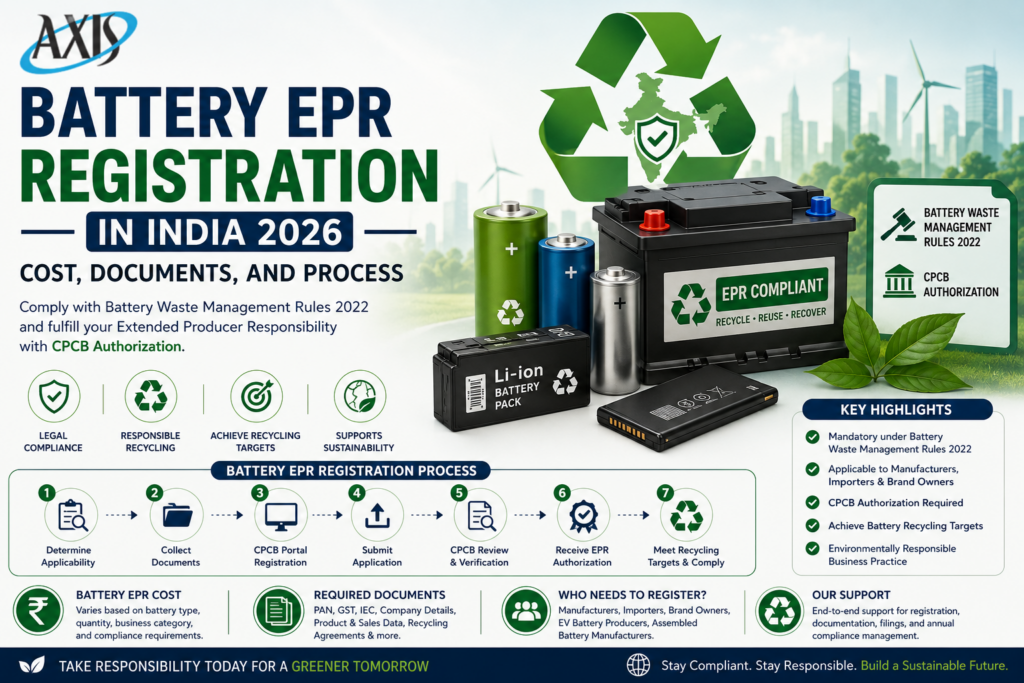
Registration Procedure
Application Preparation
Identify obligations under Battery Producer Responsibility regulations.
Documentation Review
Collect and verify all supporting documents.
CPCB Portal Registration
Create an account and enter business details on the CPCB portal.
Submission of Compliance Data
Upload battery-related information and supporting records.
Scrutiny by CPCB
Authorities review the submitted application and may seek clarifications.
Grant of Authorization
Once approved, the applicant receives Battery EPR Authorization.
Ongoing Compliance
Producers must continue reporting and meeting annual Battery Collection and Recycling obligations.
Battery EPR Cost Factors
The Battery EPR Cost varies depending on:
- Business category
- Quantity of batteries introduced into the market
- Type of batteries covered
- Recycling obligations
- Compliance management requirements
- Professional consultancy support
Because every business has unique compliance requirements, cost assessments are generally conducted on a case-by-case basis.
Advantages of CPCB Battery Registration
Obtaining registration offers multiple benefits:
- Regulatory compliance
- Better environmental governance
- Improved stakeholder confidence
- Reduced compliance risks
- Support for sustainability initiatives
- Enhanced corporate image
- Long-term business continuity
Organizations involved in Lithium-Ion Battery EPR and Lead Acid Battery EPR particularly benefit from structured recycling mechanisms and traceability systems.
How Indiaxis Supports Businesses
Indiaxis provides professional assistance for:
- CPCB Battery Registration
- EPR Authorization for Batteries
- Compliance Documentation
- Portal Filing Support
- Battery Recycling Compliance
- Annual Reporting Assistance
- Regulatory Consultation
Their experts help businesses complete registration efficiently while maintaining compliance with evolving environmental regulations.
Conclusion
Getting Battery EPR Registration in India 2026: Cost, Documents, and Process are a prerequisite for all those who are involved in the manufacturing, importing, and brand-owning in the battery industry. By staying aligned with the Battery Waste Management Rules 2022, a company can adhere to all legal requirements and environmental responsibility and recycling process for the same. Companies applying for Battery EPR Authorization and meeting Battery Recycling Targets India can do so with ease in compliance with the regulations.
FAQs
1. What is CPCB Battery Registration?
It is the mandatory registration required for entities covered under the Battery Waste Management Rules 2022.
2. Is Battery EPR mandatory in India?
Yes, eligible manufacturers, importers, and brand owners must comply with EPR regulations.
3. Which batteries are covered under EPR?
Portable, automotive, industrial, lithium-ion, and EV batteries are covered.
4. What is the purpose of Battery Recycling Targets?
These targets ensure that producers contribute to responsible recycling and waste management.
5. Can importers apply for Battery EPR Registration?
Yes, importers must obtain EPR Certificate for Battery Importers before selling batteries in India.
6. How long does the registration process take?
Timelines vary depending on documentation quality and CPCB review requirements.
7. What happens if a company fails to comply?
Non-compliance may result in penalties, environmental compensation, and regulatory action.