
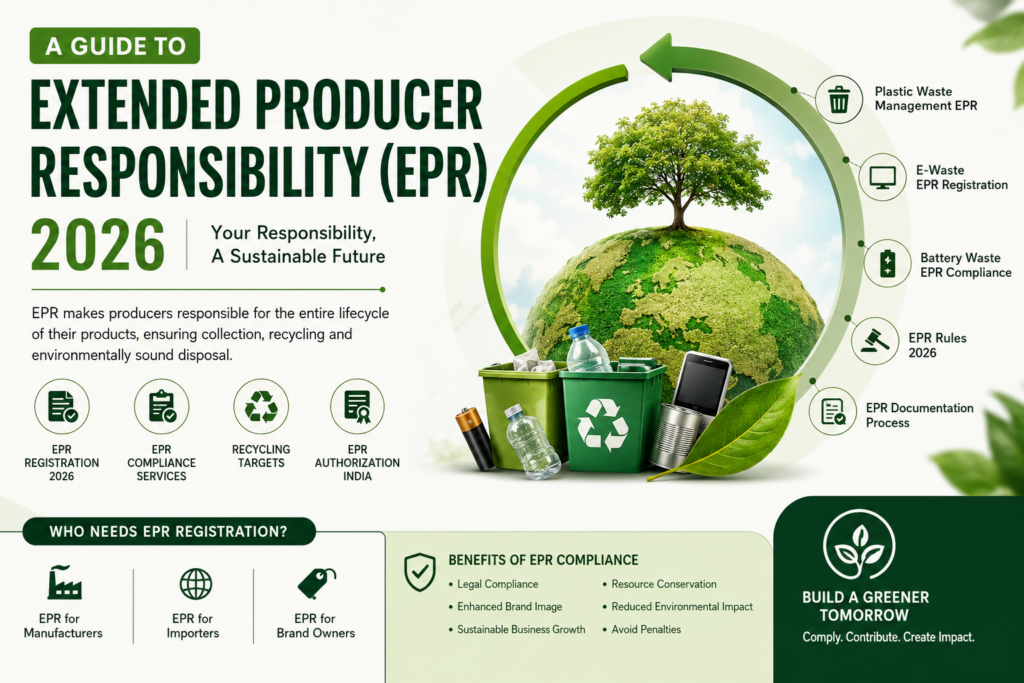
Enterprises working in India have begun paying due attention to environmental aspects. Due to new rules concerning waste disposal, waste and high attention of environment, business enterprises are required to adhere to upcoming rules of EPR. Book Guide to Extended Producer Responsibility (EPR) 2026 will offer clear directions about the requirements of registration, rules and compliance, and regulatory approval of recycling targets that enterprises across industries must follow.Whether your company manufactures products, imports goods, or operates as a brand owner, understanding A guide to Extended Producer Responsibility (EPR) 2026 is essential for maintaining legal compliance and supporting sustainable development initiatives.
Understanding Extended Producer Responsibility
Extended Producer Responsibility (EPR) is an environmental policy approach that makes producers responsible for the collection, recycling, and disposal of products after they reach the end of their lifecycle. The primary objective is to reduce environmental pollution while encouraging resource recovery and recycling.
As explained in A guide to Extended Producer Responsibility (EPR) 2026, businesses are expected to manage waste generated by their products through approved recycling and waste management systems. Compliance is regulated through various CPCB guidelines and waste management rules.
Who Must Obtain EPR Registration?
Several categories of businesses fall under EPR regulations. These include:
- EPR for Manufacturers
- EPR for Importers
- EPR for Brand Owners
- Plastic packaging companies
- Electronic equipment producers
- Battery manufacturers and importers
- Consumer goods companies
Obtaining EPR Registration 2026 is often mandatory before marketing regulated products within India.
According to A guide to Extended Producer Responsibility (EPR) 2026, organizations must assess their product category and determine the applicable registration requirements.
Importance of EPR Compliance
Achieving Extended Producer Responsibility Compliance offers numerous benefits beyond regulatory obligations.
Key Advantages:
- Compliance with environmental regulations
- Improved corporate sustainability
- Stronger brand image
- Better waste management practices
- Reduced legal risks
- Enhanced consumer confidence
Companies following A guide to Extended Producer Responsibility (EPR) 2026 are better positioned to meet government requirements while demonstrating environmental responsibility.
Major EPR Categories in India
Plastic Waste Management EPR
Organizations involved in plastic packaging must comply with Plastic Waste Management EPR regulations. Producers are responsible for ensuring collection and recycling of plastic waste generated by their products.
E-Waste EPR Registration
Electronic product manufacturers and importers require E-Waste EPR Registration to manage electronic waste responsibly through authorized recycling channels.
Battery Waste EPR Compliance
Businesses dealing with batteries must fulfill Battery Waste EPR Compliance obligations by ensuring proper collection, transportation, and recycling of used batteries.
These categories form an important part of A guide to Extended Producer Responsibility (EPR) 2026 and require continuous compliance monitoring.
EPR Authorization India Process
Obtaining EPR Authorization India generally involves several steps:
Step 1: Business Assessment
Determine the applicable EPR category based on products and operations.
Step 2: Documentation Preparation
Prepare all documents required under the EPR Documentation Process.
Step 3: CPCB Registration
Submit the application through the official portal for CPCB EPR Registration.
Step 4: Compliance Planning
Develop a waste collection and recycling strategy.
Step 5: Reporting and Monitoring
Track recycling activities and maintain compliance records.
This structured approach is highlighted throughout A guide to Extended Producer Responsibility (EPR) 2026.
Understanding EPR Recycling Targets
One of the most important requirements under EPR regulations is the achievement of EPR Recycling Targets. Regulatory authorities prescribe annual targets that producers must meet through authorized recyclers.
Businesses must maintain transparent records of waste collection, recycling certificates, and compliance reports. Meeting these obligations is a critical component of Extended Producer Responsibility Compliance.
Organizations that fail to achieve targets may face penalties or regulatory actions under applicable waste management laws.
Why Choose Indiaxis for EPR Compliance Services?
Indiaxis offers professional EPR Compliance Services tailored to businesses operating across multiple industries. Their expert consultants provide end-to-end assistance with:
- CPCB EPR Registration
- EPR Authorization India
- EPR Documentation Process
- Compliance audits
- Recycling target management
- Regulatory advisory services
As an experienced EPR Consultant India, Indiaxis helps businesses navigate complex regulations while ensuring timely approvals and ongoing compliance.
Companies looking for reliable support can benefit significantly from expert guidance provided under A guide to Extended Producer Responsibility (EPR) 2026.
EPR Rules 2026 and Future Compliance
The updated EPR Rules 2026 emphasize accountability, traceability, and effective waste management practices. Regulatory authorities continue to strengthen environmental requirements to promote sustainable business operations.
Businesses that follow Extended Producer Responsibility Guidelines India can improve compliance performance while contributing to national sustainability goals.
Implementing the recommendations outlined in A guide to Extended Producer Responsibility (EPR) 2026 helps organizations remain compliant, environmentally responsible, and prepared for future regulatory developments.
Frequently Asked Questions (FAQs)
1. What is Extended Producer Responsibility?
Extended Producer Responsibility is a policy that requires producers to manage the waste generated by their products after consumption.
2. Who needs EPR Registration 2026?
Manufacturers, importers, brand owners, battery producers, and electronics companies may require registration.
3. What is CPCB EPR Registration?
It is the registration process administered by the Central Pollution Control Board for regulated businesses.
4. What are EPR Recycling Targets?
These are mandatory waste collection and recycling obligations assigned to producers.
5. What is E-Waste EPR Registration?
It is a compliance requirement for businesses manufacturing or importing electronic products.
6. What documents are required for EPR registration?
Business registration certificates, GST details, PAN, product information, and waste management plans are commonly required.
7. Why is EPR compliance important?
Compliance helps businesses avoid penalties while supporting environmental sustainability.
8. Can an EPR Registration Consultant help?
Yes, an experienced consultant can simplify registration, documentation, reporting, and compliance management.Enterprises working in India have begun paying due attention to environmental aspects. Due to new rules concerning waste disposal, waste and high attention of environment, business enterprises are required to adhere to upcoming rules of EPR. Book Guide to Extended Producer Responsibility (EPR) 2026 will offer clear directions about the requirements of registration, rules and compliance, and regulatory approval of recycling targets that enterprises across industries must follow.Whether your company manufactures products, imports goods, or operates as a brand owner, understanding A guide to Extended Producer Responsibility (EPR) 2026 is essential for maintaining legal compliance and supporting sustainable development initiatives.
Understanding Extended Producer Responsibility
Extended Producer Responsibility (EPR) is an environmental policy approach that makes producers responsible for the collection, recycling, and disposal of products after they reach the end of their lifecycle. The primary objective is to reduce environmental pollution while encouraging resource recovery and recycling.
As explained in A guide to Extended Producer Responsibility (EPR) 2026, businesses are expected to manage waste generated by their products through approved recycling and waste management systems. Compliance is regulated through various CPCB guidelines and waste management rules.
Who Must Obtain EPR Registration?
Several categories of businesses fall under EPR regulations. These include:
- EPR for Manufacturers
- EPR for Importers
- EPR for Brand Owners
- Plastic packaging companies
- Electronic equipment producers
- Battery manufacturers and importers
- Consumer goods companies
Obtaining EPR Registration 2026 is often mandatory before marketing regulated products within India.
According to A guide to Extended Producer Responsibility (EPR) 2026, organizations must assess their product category and determine the applicable registration requirements.
Importance of EPR Compliance
Achieving Extended Producer Responsibility Compliance offers numerous benefits beyond regulatory obligations.
Key Advantages:
- Compliance with environmental regulations
- Improved corporate sustainability
- Stronger brand image
- Better waste management practices
- Reduced legal risks
- Enhanced consumer confidence
Companies following A guide to Extended Producer Responsibility (EPR) 2026 are better positioned to meet government requirements while demonstrating environmental responsibility.
Major EPR Categories in India
Plastic Waste Management EPR
Organizations involved in plastic packaging must comply with Plastic Waste Management EPR regulations. Producers are responsible for ensuring collection and recycling of plastic waste generated by their products.
E-Waste EPR Registration
Electronic product manufacturers and importers require E-Waste EPR Registration to manage electronic waste responsibly through authorized recycling channels.
Battery Waste EPR Compliance
Businesses dealing with batteries must fulfill Battery Waste EPR Compliance obligations by ensuring proper collection, transportation, and recycling of used batteries.
These categories form an important part of A guide to Extended Producer Responsibility (EPR) 2026 and require continuous compliance monitoring.
EPR Authorization India Process
Obtaining EPR Authorization India generally involves several steps:
Step 1: Business Assessment
Determine the applicable EPR category based on products and operations.
Step 2: Documentation Preparation
Prepare all documents required under the EPR Documentation Process.
Step 3: CPCB Registration
Submit the application through the official portal for CPCB EPR Registration.
Step 4: Compliance Planning
Develop a waste collection and recycling strategy.
Step 5: Reporting and Monitoring
Track recycling activities and maintain compliance records.
This structured approach is highlighted throughout A guide to Extended Producer Responsibility (EPR) 2026.
Understanding EPR Recycling Targets
One of the most important requirements under EPR regulations is the achievement of EPR Recycling Targets. Regulatory authorities prescribe annual targets that producers must meet through authorized recyclers.
Businesses must maintain transparent records of waste collection, recycling certificates, and compliance reports. Meeting these obligations is a critical component of Extended Producer Responsibility Compliance.
Organizations that fail to achieve targets may face penalties or regulatory actions under applicable waste management laws.
Why Choose Indiaxis for EPR Compliance Services?
Indiaxis offers professional EPR Compliance Services tailored to businesses operating across multiple industries. Their expert consultants provide end-to-end assistance with:
- CPCB EPR Registration
- EPR Authorization India
- EPR Documentation Process
- Compliance audits
- Recycling target management
- Regulatory advisory services
As an experienced EPR Consultant India, Indiaxis helps businesses navigate complex regulations while ensuring timely approvals and ongoing compliance.
Companies looking for reliable support can benefit significantly from expert guidance provided under A guide to Extended Producer Responsibility (EPR) 2026.
EPR Rules 2026 and Future Compliance
The updated EPR Rules 2026 emphasize accountability, traceability, and effective waste management practices. Regulatory authorities continue to strengthen environmental requirements to promote sustainable business operations.
Businesses that follow Extended Producer Responsibility Guidelines India can improve compliance performance while contributing to national sustainability goals.
Implementing the recommendations outlined in A guide to Extended Producer Responsibility (EPR) 2026 helps organizations remain compliant, environmentally responsible, and prepared for future regulatory developments.
Frequently Asked Questions (FAQs)
1. What is Extended Producer Responsibility?
Extended Producer Responsibility is a policy that requires producers to manage the waste generated by their products after consumption.
2. Who needs EPR Registration 2026?
Manufacturers, importers, brand owners, battery producers, and electronics companies may require registration.
3. What is CPCB EPR Registration?
It is the registration process administered by the Central Pollution Control Board for regulated businesses.
4. What are EPR Recycling Targets?
These are mandatory waste collection and recycling obligations assigned to producers.
5. What is E-Waste EPR Registration?
It is a compliance requirement for businesses manufacturing or importing electronic products.
6. What documents are required for EPR registration?
Business registration certificates, GST details, PAN, product information, and waste management plans are commonly required.
7. Why is EPR compliance important?
Compliance helps businesses avoid penalties while supporting environmental sustainability.
8. Can an EPR Registration Consultant help?
Yes, an experienced consultant can simplify registration, documentation, reporting, and compliance management.