
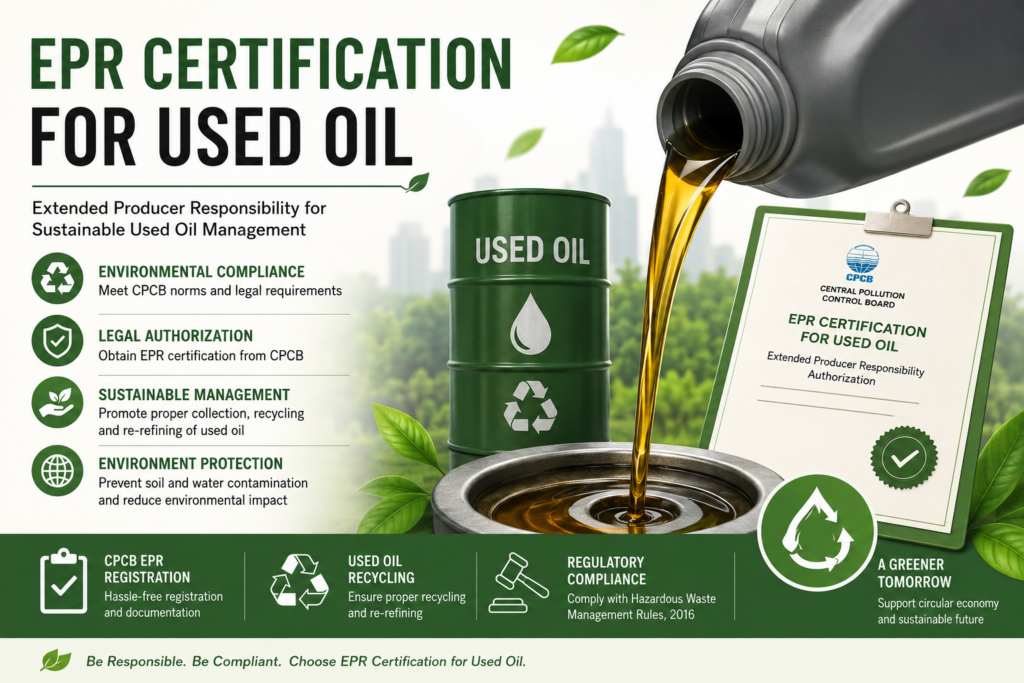
The topic of environmental sustainability and waste management practices is on the rise in the industries dealing with lubricants and petroleum-based products. Keeping in view the concern to preserve the environment from waste lubricating oils, the Government of India has passed several regulations requiring the organizations that manufacture, import and own brand name to get the EPR CERTIFICATION FOR USED OIL and be responsible for the collection and recycling and environmentally sound management of used oil. Organizations failing to comply with these regulations could face legal actions. Indaxis offers expert support services for obtaining the EPR CERTIFICATION FOR USED OIL to ensure your organization abides by legal requirement.
Understanding EPR Certification for Used Oil
EPR CERTIFICATION FOR USED OIL is part of the Extended Producer Responsibility framework established to ensure that entities introducing lubricating oil into the market remain accountable for its end-of-life management. The framework promotes responsible collection, recycling, recovery, and disposal of used oil through authorized channels.
Under Extended Producer Responsibility for Used Oil, businesses are required to meet recycling obligations and maintain records demonstrating compliance with applicable environmental regulations.
The primary objective of EPR CERTIFICATION FOR USED OIL is to reduce environmental contamination caused by improper disposal of waste oil and encourage resource recovery through certified recycling processes.
Why EPR Certification for Used Oil is Important
Obtaining EPR CERTIFICATION FOR USED OIL offers several regulatory and operational advantages:
- Compliance with CPCB regulations
- Environmentally responsible waste handling
- Improved sustainability performance
- Better corporate governance
- Enhanced market credibility
- Reduction of environmental liabilities
- Support for circular economy initiatives
Organizations seeking long-term environmental compliance should prioritize EPR CERTIFICATION FOR USED OIL as part of their sustainability strategy.
Applicability of Used Oil EPR Registration
The requirement for Used Oil EPR Registration generally applies to:
- Lubricating oil manufacturers
- Oil importers
- Brand owners
- Industrial lubricant suppliers
- Used oil collection agencies
- Authorized recyclers
- Recovery and reprocessing facilities
Compliance under Used Oil Producer Responsibility ensures that waste oil is properly collected and recycled rather than being disposed of in ways that may harm the environment.
Major Compliance Requirements
EPR Portal Registration
Entities must complete EPR Portal Registration through the designated CPCB platform. The application includes organizational details, product information, and waste management plans.
CPCB EPR Authorization
Obtaining CPCB EPR Authorization is mandatory before carrying out regulated activities involving used oil management.
Recycling Targets
Businesses must establish arrangements for Used Oil Collection and Recycling through authorized recyclers and recovery facilities.
Record Maintenance
Proper documentation, transaction records, recycling certificates, and compliance reports must be maintained regularly.
Meeting these obligations is essential for retaining EPR CERTIFICATION FOR USED OIL and avoiding regulatory action.
Documents Required for Registration
To obtain EPR CERTIFICATION FOR USED OIL, applicants generally need:
- Company registration certificate
- PAN and GST details
- IEC certificate (where applicable)
- Authorized signatory identification
- Product specifications
- Business profile
- Waste oil management plan
- Recycler agreements
- Environmental compliance documents
Accurate documentation improves the chances of obtaining approval without delays.
Step-by-Step Registration Process
Indiaxis follows a structured compliance approach:
Step 1: Regulatory Assessment
Understanding applicability and compliance obligations.
Step 2: Documentation Preparation
Collecting and organizing mandatory documents.
Step 3: Online Application Filing
Submission through the CPCB registration portal.
Step 4: Regulatory Evaluation
Authorities review documentation and compliance plans.
Step 5: Approval and Monitoring
After approval, businesses must continue meeting compliance requirements and reporting obligations.
This systematic process simplifies obtaining EPR CERTIFICATION FOR USED OIL for organizations across India.
Sustainable Used Oil Management
Proper Sustainable Used Oil Management offers significant environmental benefits:
- Reduced soil contamination
- Prevention of groundwater pollution
- Conservation of natural resources
- Promotion of waste recovery
- Reduced dependence on virgin oil production
- Support for industrial sustainability goals
Through effective Used Oil Recovery and Recycling, organizations can contribute positively to environmental protection while remaining compliant.
Why Choose Indiaxis?
Indiaxis delivers comprehensive support for:
- EPR Certification for Used Oil
- CPCB Used Oil Registration
- Used Oil EPR Guidelines Compliance
- Hazardous Waste Compliance
- Waste Oil Management
- Environmental Compliance for Used Oil
- Waste Oil Recycling Certificate
- EPR Compliance Services India
Our team assists businesses throughout the compliance lifecycle, from registration to ongoing reporting and monitoring.
Advantages of Working with Experts
A professional EPR Consultant for Used Oil can help businesses:
- Avoid compliance errors
- Reduce approval timelines
- Ensure proper documentation
- Meet recycling obligations
- Maintain CPCB reporting requirements
- Stay updated on regulatory changes
Indiaxis offers practical solutions tailored to each client’s operational requirements.
Conclusion
With growing emphasis on environmental responsibility, EPR CERTIFICATION FOR USED OIL has become an essential compliance requirement for manufacturers, importers, and other stakeholders dealing with lubricating oils. Proper implementation of EPR obligations helps organizations achieve regulatory compliance, improve sustainability performance, and contribute to responsible waste management practices.
Indiaxis provides end-to-end assistance for EPR CERTIFICATION FOR USED OIL, ensuring smooth registration, effective compliance management, and long-term environmental responsibility.
FAQs
1. What is EPR Certification for Used Oil?
It is a regulatory requirement that makes producers responsible for used oil collection, recycling, and recovery.
2. Who must obtain Used Oil EPR Registration?
Manufacturers, importers, brand owners, and other entities dealing with lubricating oils may require registration.
3. What is CPCB Used Oil Registration?
It is the registration process conducted through the CPCB platform for regulated entities.
4. Why is used oil classified as hazardous waste?
Improper disposal can contaminate soil, water, and ecosystems, making regulatory management necessary.
5. What documents are required for registration?
Business registration documents, GST, PAN, waste management plans, and recycler agreements are commonly required.
6. How does Used Oil Collection and Recycling support compliance?
It helps organizations meet recycling targets mandated under EPR regulations.
7. What are the benefits of obtaining a Waste Oil Recycling Certificate?
It demonstrates compliance with environmental regulations and validates responsible recycling activities.
8. How can Indiaxis assist with EPR compliance?
Indiaxis provides registration support, documentation assistance, regulatory guidance, and ongoing compliance management services.