
Drone technology has rapidly transformed industries across India, from agriculture and real estate to filmmaking, surveillance, and logistics. With the increasing use of drones, the Government of India has introduced clear regulations to ensure safety, accountability, and proper usage. Drone registration in India is now mandatory for most drone operators and owners, making it essential to understand the process, requirements, and legal framework.
Regulatory Authority and Framework
Drone operations in India are governed by the Directorate General of Civil Aviation (DGCA) under the Ministry of Civil Aviation. The primary regulation is based on the Drone Rules, 2021, which replaced earlier guidelines to simplify procedures and promote ease of doing business. These rules aim to balance innovation with safety and national security.
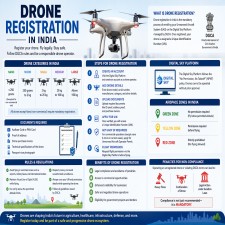
Classification of Drones
Before registration, drones are categorized based on their weight:
- Nano Drones: Less than or equal to 250 grams
- Micro Drones: 250 grams to 2 kg
- Small Drones: 2 kg to 25 kg
- Medium Drones: 25 kg to 150 kg
- Large Drones: More than 150 kg
Each category has different requirements, but most drones—except nano drones used for non-commercial purposes—require registration.
Mandatory Drone Registration
In India, every drone must be registered on the Digital Sky Platform, an online portal developed by the government. Once registered, the drone is issued a Unique Identification Number (UIN), similar to a vehicle registration number. Without a UIN, operating a drone is considered illegal.
Steps for Drone Registration
- Create an Account on Digital Sky Platform
The operator must first register on the Digital Sky portal using valid credentials. - Provide Drone Details
Information such as manufacturer details, model number, serial number, and specifications must be submitted. - Upload Required Documents
This includes identity proof, address proof, and invoice of the drone purchase. - Pay Applicable Fees
A nominal fee is charged depending on the drone category. - Receive UIN
After successful verification, a Unique Identification Number is issued.
Remote Pilot License (RPL)
For commercial drone operations, obtaining a Remote Pilot License (RPL) is mandatory. This license is issued after completing training from a DGCA-approved Remote Pilot Training Organization (RPTO). The training includes both theoretical and practical aspects such as airspace rules, meteorology, navigation, and emergency handling.
Geo-Fencing and Airspace Permissions
India follows a strict airspace classification system divided into:
- Green Zone: No permission required (up to a certain altitude)
- Yellow Zone: Requires permission from authorities
- Red Zone: Completely restricted areas
Operators must check airspace permissions through the Digital Sky Platform before flying. Unauthorized drone operations in restricted areas can lead to heavy penalties.
NPNT Compliance
One of the most important features of drone regulation in India is No Permission, No Takeoff (NPNT). This system ensures that a drone cannot take off without prior approval from the Digital Sky platform. It is a critical step toward ensuring controlled and lawful drone usage.
Exemptions
Nano drones used for recreational purposes are exempt from registration and licensing requirements. However, even these drones must follow safety guidelines and should not be flown in restricted areas.
Penalties for Non-Compliance
Operating an unregistered drone or violating drone regulations can lead to serious consequences, including:
- Monetary fines
- Cancellation of license
- Confiscation of drone
- Legal action under aviation laws
Therefore, compliance with registration and operational rules is crucial.
Benefits of Drone Registration
- Legal Compliance: Ensures you operate within the law
- Safety Assurance: Reduces risks to people and property
- Business Opportunities: Enables commercial drone services
- Government Support: Access to various drone-related initiatives and schemes
Future of Drone Industry in India
India’s drone sector is expected to grow significantly, supported by government initiatives such as the Production Linked Incentive (PLI) scheme and liberalized drone rules. Registration plays a vital role in building a structured and secure drone ecosystem.
Conclusion
Drone registration in India is a straightforward yet essential process for anyone looking to operate drones legally. With simplified rules, online registration, and growing industry opportunities, the Indian drone ecosystem is becoming more accessible than ever. Whether you are a hobbyist or a commercial operator, understanding and complying with drone registration norms ensures safe and efficient drone usage while contributing to the country’s technological advancement.