
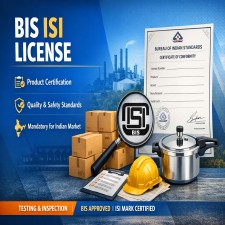
In India, product safety and quality standards are regulated by the Bureau of Indian Standards (BIS). One of the most recognized certifications issued by BIS is the BIS ISI License. This certification allows manufacturers to display the ISI mark on their products, confirming that the product meets the required Indian quality standards.
For manufacturers who want to build trust in the market, obtaining a BIS ISI License is extremely important. Many products require mandatory certification before they can be sold in India. With proper ISI registration, businesses can ensure compliance with regulatory requirements while improving product credibility.
In this guide, we will explore everything about the BIS ISI License, including the registration process, benefits, and the importance of professional ISI certification services for manufacturers.
What is BIS ISI Certification?
The BIS ISI License is issued under the BIS certification scheme and permits manufacturers to use the ISI mark on approved products. The ISI mark indicates that the product has been tested and verified according to Indian Standard specifications.
Obtaining BIS ISI certification demonstrates that the product meets strict safety, reliability, and quality standards. Products with this certification gain higher consumer trust and are more competitive in the Indian market.
Manufacturers must complete ISI registration with BIS before using the ISI mark on their products.
Importance of BIS ISI License for Manufacturers
The BIS ISI License plays a significant role in ensuring product quality and consumer safety. Some key reasons why manufacturers need this certification include:
1. Compliance with Government Regulations
Many products require mandatory certification under Indian law. Having a BIS ISI License ensures compliance with these regulations.
2. Quality Assurance
The ISI mark certification guarantees that products meet BIS-approved quality standards.
3. Consumer Confidence
Products carrying the ISI mark are widely trusted by customers across India.
4. Competitive Advantage
Companies with ISI license India approval can stand out in a competitive marketplace.
5. Market Access
Without proper BIS ISI certification, certain products cannot legally be sold in India.
Products Covered Under ISI Certification
Many industries require certification under the BIS scheme. Some commonly certified products include:
- Electrical appliances
- Steel and construction materials
- LPG cylinders and valves
- Domestic pressure cookers
- Cement products
- Switches and electrical cables
Manufacturers producing these items must obtain a BIS ISI License before introducing their products into the Indian market.
BIS ISI License Registration Process
The process for obtaining a BIS ISI License involves several regulatory steps. Manufacturers often rely on professional BIS approval services to complete the process efficiently.
Step 1: Application Filing
Manufacturers submit the application with detailed product specifications and technical documents.
Step 2: Product Testing
Samples are sent to BIS-recognized laboratories for quality testing.
Step 3: Factory Inspection
BIS officials inspect the manufacturing facility to evaluate quality control systems.
Step 4: Certification Approval
After successful verification, BIS grants the BIS ISI License.
Step 5: ISI Mark Usage
Manufacturers can apply the ISI mark on certified products after receiving the license.
Role of ISI Certification Consultant
Obtaining certification requires technical knowledge and regulatory understanding. This is where a professional ISI certification consultant becomes valuable.
A reliable BIS license consultant assists manufacturers in:
- Preparing documentation
- Coordinating product testing
- Filing applications with BIS
- Managing inspection processes
- Ensuring regulatory compliance
Professional ISI certification services help reduce errors and improve approval timelines.
Indiaxis: Reliable BIS Registration Support
Many manufacturers seek expert consulting services to simplify the certification process. Indiaxis provides professional guidance for BIS registration India, helping companies achieve compliance with BIS regulations.
Their consulting services include:
- Complete ISI certification services
- Documentation and application management
- Product testing coordination
- Assistance for ISI license India
- End-to-end BIS approval services
With experienced consultants, manufacturers can obtain their BIS ISI License smoothly and efficiently.
Common Challenges in BIS Certification
Although the certification process is straightforward, manufacturers often face challenges such as:
- Complex documentation requirements
- Delays in product testing
- Lack of knowledge about BIS standards
- Preparation for factory inspections
Working with a professional ISI certification consultant helps overcome these issues and ensures faster certification.
Benefits of BIS Registration India
Obtaining BIS registration India offers long-term advantages for manufacturers:
- Legal compliance with Indian standards
- Improved product credibility
- Increased consumer trust
- Better market access
- Higher brand reputation
A BIS ISI License is therefore not only a regulatory requirement but also a strategic advantage for businesses.
Conclusion
The BIS ISI License is a vital certification that ensures product quality, safety, and compliance with Indian regulations. Manufacturers producing regulated products must obtain BIS ISI certification before selling them in the Indian market.
Through proper ISI registration, companies can demonstrate their commitment to quality while building consumer confidence. Professional BIS license consultant services make the certification process easier by handling documentation, testing coordination, and regulatory communication.
With expert assistance from firms like Indiaxis, businesses can efficiently secure their BIS ISI License and successfully expand their presence in the Indian marketplace.
FAQs on BIS ISI License
1. What is the purpose of a BIS ISI License?
The BIS ISI License ensures that products meet the safety and quality standards defined by the Bureau of Indian Standards.
2. Is ISI certification mandatory in India?
Yes, many products require ISI mark certification before they can be legally sold in India.
3. How can a manufacturer apply for ISI registration?
Manufacturers can apply through the BIS portal or with the help of an ISI certification consultant.
4. How long does BIS certification take?
The process for obtaining a BIS ISI License usually takes 4–8 weeks depending on testing and inspections.
5. What is the validity of an ISI license?
The ISI license India is generally valid for one year and can be renewed.
6. Why should companies use BIS approval services?
Professional BIS approval services help simplify documentation, testing, and compliance procedures.
7. Can foreign manufacturers obtain BIS ISI certification?
Yes, foreign manufacturers can apply under the BIS Foreign Manufacturers Certification Scheme.