
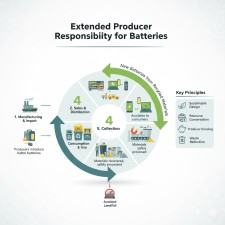
As India advances toward clean mobility and renewable energy, battery usage has skyrocketed. However, battery waste poses a major environmental threat if not managed properly. To ensure safe recycling and disposal, the government has introduced EPR for batteries, which mandates manufacturers and importers to take responsibility for the end-of-life management of batteries. This has transformed the way industries approach battery waste management.
Understanding the Concept of Extended Producer Responsibility for Batteries
Extended Producer Responsibility for batteries makes producers accountable for collecting and recycling the batteries after consumer use. Instead of shifting the burden to municipalities or end-users, this regulation ensures that those who profit from batteries also manage their safe disposal. Thus, EPR for battery is necessary for every manufacturer.
What Does Battery EPR Certification Cover?
Battery EPR certification includes:
- Collection of used batteries
- Channelization to authorized recyclers
- Monitoring recycling and material recovery
- Maintaining digital traceability
- Filing compliance reports online
It also pushes companies to promote battery take-back program awareness among customers.
Categories of Batteries Covered Under EPR
- Portable Batteries
- Automotive Batteries
- Industrial Batteries
- EV Batteries
All these categories must have EPR for battery manufacturers before selling in India.
EPR Compliance for Batteries – Step-by-Step
- Documentation Preparation
- CPCB Portal Registration
- Battery EPR Certification Application
- Agreement with recyclers
- Target allocation & reporting
- Annual Compliance Filing
Importance of Battery Waste Management
Battery waste contains chemicals and heavy metals that cause soil and groundwater contamination. Responsible battery waste management ensures:
✅ Safe material extraction
✅ Reduced landfill dumping
✅ Efficient metal reuse
✅ Circular economy development
How Battery Take-Back Programs Work
A battery take-back program allows consumers to return used batteries to collection centers. Companies set up drop-off points or reverse logistics channels. The collected batteries are then transferred to authorized recyclers for processing.
Role of EPR Consulting Services in Compliance
EPR consulting services help producers navigate documentation, approvals, collection targets, and reporting. They also provide support for accessing government-recognized recyclers, ensuring full transparency and legal compliance.
Sustainable Battery Disposal & Recycling
Sustainable battery disposal involves safe transportation, dismantling, and recycling using non-hazardous techniques. Lithium-ion recycling also makes valuable metals available for reuse, reducing mining dependency and environmental stress.
Future of EPR for Battery in India
With the EV revolution and industrial electrification, stricter EPR enforcement is expected. Companies that adopt sustainable waste solutions early will gain a competitive and compliance advantage.
Final Thought
EPR for Battery is a vital pillar of environmental compliance and corporate responsibility. Businesses that implement strong take-back and recycling systems not only meet legal requirements but also build a greener, more responsible brand image. By collaborating with certified recyclers and leveraging expert EPR consulting services, companies can ensure long-term sustainability and regulatory compliance