
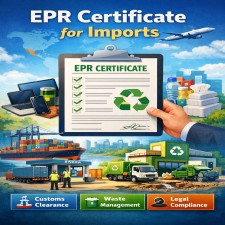
Importing products into India has become easier in terms of logistics but stricter in environmental compliance. One of the most critical approvals today is the EPR Certificate for imports. Businesses importing electronics, plastic packaging, batteries, and electrical products must comply with Extended Producer Responsibility regulations before entering the Indian market.
Many importers assume GST and IEC are sufficient for import clearance. However, environmental compliance has now become equally important. Without EPR approval, goods may be stopped at customs, rejected by marketplaces, or penalized by authorities.
Understanding the procedure beforehand can save months of delays and heavy financial losses.
Understanding EPR Certification
EPR certification is a government authorization that makes importers responsible for managing the waste generated by their products after use. The Extended Producer Responsibility Certificate ensures companies contribute to recycling and safe disposal rather than shifting the burden to municipalities. This regulation promotes a circular economy — products sold must also be recycled.
Who Needs an EPR Certificate for Imports
The EPR Certificate for imports is mandatory for businesses importing:
- Electronic devices
- Electrical appliances
- Plastic packaged goods
- Batteries
- IT equipment
- Consumer durable products
Even if the importer does not manufacture the product and only trades or brands it, the responsibility still applies.
Why the Government Made It Mandatory
India generates massive e-waste and plastic waste every year. Earlier, responsibility ended at the point of sale. Now, producers and importers must finance recycling and recovery.
This ensures:
- Waste reduction
- Recycling industry growth
- Environmental safety
- Sustainable product lifecycle
EPR Certification in India connects importers with authorized recyclers to achieve yearly recycling targets.
Registration Process Explained
Getting the EPR Certificate for imports involves structured compliance steps.
Company Account Creation
Importer registers on the CPCB portal using company credentials.
Product Category Selection
Each imported item must be categorized properly under EPR rules.
Agreement with Recycler
An authorized recycler partnership is mandatory.
Target Allocation
The government assigns recycling responsibility based on the import quantity.
Application Submission
Complete documentation is uploaded online.
Approval & EPR ID
After verification, approval is granted.
Documents Required
To obtain the EPR Certificate for imports, the importer must submit:
- IEC certificate
- GST registration
- PAN details
- Product specifications
- Import invoices
- Recycling agreement
- Brand authorization letter
Accuracy is essential; even minor mismatches can delay approval.
Importance of an EPR Consultant
Many businesses hire an epr consultant because the portal requires technical environmental information. Errors often lead to rejection or repeated queries. A professional EPR Certificate Consultant helps businesses:
- Identify product categories
- Calculate recycling targets
- Prepare documentation
- Coordinate with recyclers
- Handle government queries
Companies like Indiaxis provide compliance management so importers can focus on sales rather than paperwork.
If businesses search for an EPR consultant near me, they should check experience in import-based applications, not just manufacturing cases.
Benefits of EPR Certification
Having a valid EPR Certificate for imports gives importers multiple advantages.
Faster Customs Clearance
Shipments pass verification smoothly.
Marketplace Listing Approval
Required for Amazon, Flipkart, and B2B portals.
Legal Protection
Avoid fines and notices.
Environmental Responsibility
Improves brand credibility.
Long-Term Business Continuity
Prevents sudden sales bans.
What Happens Without Compliance
Selling regulated goods without an EPR Certificate for imports can lead to serious consequences:
- Import rejection
- Penalty notices
- Online listing removal
- Business interruption
Government departments now share data digitally, making non-compliance easy to detect.
Maintaining Compliance After Approval
EPR approval is not a one-time task.
Businesses must:
- Meet yearly recycling targets
- Submit annual returns
- Maintain recycler invoices
- Update import quantity
Ignoring post-approval responsibilities can cancel registration.
Conclusion
The EPR Certificate for imports is now a basic requirement for importing regulated goods into India. Instead of treating it as paperwork, businesses should view it as part of the product lifecycle responsibility.
With proper documentation and guidance from an EPR Certification expert, importers can avoid delays, penalties, and legal complications. Environmental compliance is becoming a permanent part of trade regulations, and early adoption ensures long-term business success.
FAQs
1. Can customs stop goods without EPR approval?
Yes, shipments can be held or rejected.
2. Is EPR required for private label brands?
Yes, brand owners importing products must comply.
3. How often must compliance reports be filed?
Annually.
4. Does each product need separate registration?
Yes, category-wise approval is required.
5. What is a recycler agreement?
A contract with an authorized waste recycling agency.
6. Is EPR required for small importers?
Yes, quantity does not remove responsibility.
7. Can a certificate be cancelled?
Yes, if yearly targets are not met.