
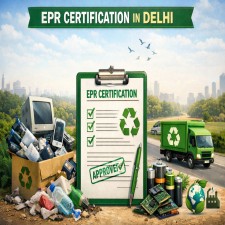
Rapid industrial growth and increased consumer demand have significantly contributed to waste generation in India. To address this issue, regulatory authorities have enforced the EPR Certification in Delhi as a mandatory requirement for producers, importers, and brand owners. This certification ensures that businesses take responsibility for the collection, recycling, and safe disposal of post-consumer waste.
Delhi, being one of India’s largest commercial centers, requires strict adherence to environmental laws. Companies seeking hassle-free EPR approval often rely on expert consultants like Indiaxis to ensure compliance with evolving CPCB regulations and avoid legal complications.
Understanding Extended Producer Responsibility
Extended Producer Responsibility is a policy approach that makes manufacturers and importers accountable for the entire lifecycle of their products. The Extended Producer Responsibility Certificate confirms that a company has an approved plan for managing waste in an environmentally responsible manner.
Obtaining EPR Certification in Delhi demonstrates a business’s commitment to sustainability while meeting mandatory regulatory standards set by the Central Pollution Control Board.
Importance of EPR Certification in Delhi
Compliance with EPR Certification is not optional for regulated sectors. Authorities have implemented strict penalties for non-compliance to control pollution and promote sustainable waste management.
Key reasons why EPR Certification in Delhi is crucial include:
- Mandatory compliance with environmental laws
- Prevention of legal notices and penalties
- Authorization for import, manufacturing, and sales
- Enhanced corporate social responsibility
Adhering to extended producer responsibility norms ensures smooth business operations across India.
Categories Covered Under EPR Certification
The scope of EPR Certification in India extends to various industries, including:
- Electrical and electronic equipment manufacturers
- Plastic packaging producers
- Battery manufacturers and importers
- Consumer electronics and IT product companies
Businesses in these categories must secure a valid EPR Certificate before commencing operations.
Step-by-Step EPR Certification Process
The process for obtaining EPR Certification in Delhi involves structured documentation and regulatory approvals:
- Eligibility Assessment
Determining whether the business falls under EPR applicability. - Documentation Preparation
Compilation of company details, product information, and compliance records. - EPR Plan Development
Creating a waste collection and recycling strategy aligned with CPCB norms. - Online Application Submission
Filing the application on the CPCB portal. - Review and EPR Approval
Authorities evaluate the application before issuing the certificate.
Professional assistance from an experienced EPR Certificate Consultant helps ensure accuracy at every stage.
Role of Indiaxis in EPR Certification
Indiaxis provides comprehensive support for EPR Certification in Delhi, helping businesses meet regulatory requirements efficiently. Their services include:
- CPCB portal registration and filing
- EPR plan preparation and recycler tie-ups
- Documentation verification
- Post-certification compliance support
By working with Indiaxis, businesses can secure faster approvals and maintain long-term environmental compliance.
Benefits of EPR Certification for Companies
Securing EPR Certification in Delhi offers multiple advantages:
- Legal permission to operate across India
- Improved sustainability and brand trust
- Reduced risk of penalties and business disruptions
- Alignment with global environmental standards
It also helps companies contribute to India’s circular economy goals.
Common Compliance Issues Faced by Businesses
Many organizations face challenges such as:
- Frequent regulatory updates
- Incomplete or incorrect documentation
- Difficulty in meeting annual recycling targets
- Lack of authorized recycler partnerships
Engaging a knowledgeable EPR Certificate Consultant simplifies compliance and ensures timely renewals.
FAQs on EPR Certification in Delhi
1. What is EPR Certification?
It is an authorization confirming that a business follows extended producer responsibility guidelines for waste management.
2. Is EPR Certification mandatory in Delhi?
Yes, it is mandatory for eligible producers, importers, and brand owners operating in Delhi.
3. Who issues the EPR Certificate?
The Central Pollution Control Board (CPCB) issues the EPR Certificate.
4. How long is EPR Certification valid?
The validity depends on CPCB guidelines and must be renewed periodically.
5. Can EPR Certification be canceled?
Yes, non-compliance or false information may lead to cancellation.
6. What documents are required for EPR approval?
Company registration, product details, EPR plan, and recycler agreements are required.
7. Why choose a consultant for EPR Certification?
Consultants ensure faster processing, accurate documentation, and ongoing compliance support.