
Sustainability and regulatory compliance are no longer optional for modern businesses. In India, EPR Certification plays a vital role in ensuring that producers take responsibility for the waste generated by their products. With stricter enforcement by environmental authorities, companies must align with extended producer responsibility norms to continue lawful operations.
This blog explains the strategic importance of EPR Certification in India, the approval process, and how professional consultants like Indiaxis simplify environmental compliance for businesses.
Understanding Extended Producer Responsibility
Extended producer responsibility is a policy framework under which producers are accountable for the post-consumer stage of their products. This includes collection, recycling, treatment, or safe disposal of waste. The objective is to reduce environmental impact while promoting circular economy practices.
By obtaining EPR Certification, businesses actively participate in responsible waste management and resource conservation.
Who Must Apply for an EPR Certificate?
The following entities are legally required to obtain an EPR certificate:
- Producers of plastic packaging and electronic goods
- Importers placing regulated products in the Indian market
- Brand owners selling under their own label
- Online marketplaces and e-commerce sellers
If your business falls under these categories, EPR approval is essential for regulatory compliance.
Categories Covered Under EPR Certification
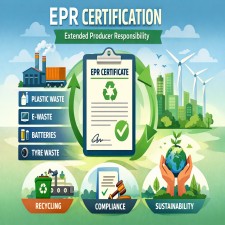
EPR Certification in India applies to multiple waste streams, including:
- Plastic Waste
- E-Waste
- Battery Waste
- Tyre Waste
Each category requires specific compliance measures, recycler tie-ups, and reporting mechanisms under the extended producer responsibility framework.
Step-by-Step EPR Certification Process
The process for securing EPR Certification involves the following steps:
- Business Evaluation
Identification of applicable EPR rules and waste category. - Data Collection & Documentation
Product details, sales data, GST records, and waste generation figures. - Application Submission
Online registration for EPR approval on the CPCB portal. - EPR Action Plan
Submission of a waste collection and recycling strategy. - Issuance of Certificate
Upon verification, the Extended Producer Responsibility Certificate is granted.
Importance of Environmental Compliance
Environmental compliance is critical for avoiding regulatory penalties and operational disruptions. Non-compliance with EPR obligations can result in:
- Financial fines
- Cancellation of licenses
- Legal action by CPCB/SPCB
- Reputational damage
A valid EPR certificate safeguards businesses from such risks.
Why Professional EPR Support Matters
Due to frequent regulatory updates and technical documentation requirements, many businesses rely on an EPR Certificate Consultant. Professional consultants assist with:
- Accurate application filing
- CPCB liaison and follow-ups
- Recycler onboarding
- Annual compliance reporting
This ensures smooth approval and long-term compliance.
How Indiaxis Helps with EPR Certification
Indiaxis offers specialized services for businesses seeking EPR approval in India. Their expert team provides:
- End-to-end EPR Certification assistance
- Customized EPR compliance strategies
- Support across plastic, e-waste, battery, and tyre categories
- Post-certification monitoring and reporting
By partnering with Indiaxis, companies can achieve faster approvals and error-free compliance.
Advantages of Obtaining EPR Certification
An approved Extended Producer Responsibility Certificate delivers multiple business benefits:
- Compliance with environmental laws
- Strengthened corporate sustainability image
- Reduced legal and operational risks
- Improved trust among stakeholders and customers
EPR compliance also enhances eligibility for partnerships with large enterprises and government tenders.
Conclusion
In today’s regulatory environment, EPR Certification is a cornerstone of sustainable business practices in India. Companies that proactively adopt extended producer responsibility not only meet legal requirements but also contribute positively to environmental protection. With expert guidance from Indiaxis, businesses can navigate the EPR framework efficiently and confidently.
FAQs on EPR Certification
Q1. What is the validity of an EPR certificate?
EPR certificates are generally valid for a specific period and require timely renewal.
Q2. Can one EPR approval cover multiple product categories?
Separate approvals may be required depending on the waste type.
Q3. Is annual reporting mandatory after EPR approval?
Yes, periodic returns and compliance reports must be submitted.
Q4. Can EPR targets be fulfilled through authorized recyclers?
Yes, CPCB-approved recyclers are used to meet EPR obligations.